
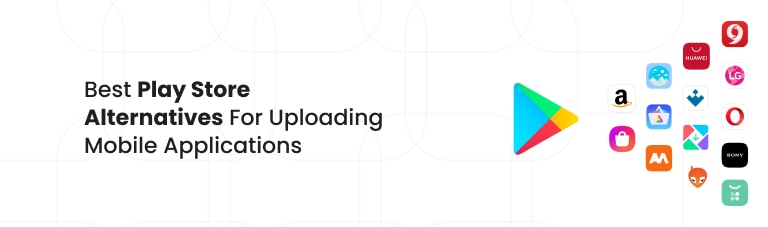
The best alternatives to the Google Play Store depend on your audience. For global commercial reach, Amazon Appstore and Samsung Galaxy Store are top choices. For open-source apps, F-Droid is the gold standard. For decentralized distribution, developers choose Aptoide, while Huawei AppGallery and GetApps are essential for the Asian market.
For years, the Google Play Store has been the default launchpad for Android applications. But as we move through 2026, relying on a single distribution channel is increasingly becoming a risky business strategy.
Between steep 15-30% commission fees, unpredictable algorithmic app suspensions, and fierce competition making organic discovery nearly impossible, scaling an application on Google Play alone is harder than ever. Furthermore, with shifting global regulations like Europe’s Digital Markets Act (DMA) breaking down walled gardens, alternative distribution is rapidly moving from a niche workaround to a mainstream necessity.
Whether you are launching a modular fintech solution, a high-end mobile game, or a privacy-first enterprise tool, diversifying your distribution network is essential. To help you bypass gatekeepers, lower user acquisition costs, and tap into highly lucrative global markets, we have compiled the ultimate guide to the 32 best Google Play alternatives for publishing your mobile apps.
Why Look Beyond the Google Play Store?
For mobile app developers and enterprise product owners, the Google Play Store is the undisputed giant of distribution. However, relying on a single channel limits strategic growth. High commission fees (typically 15-30%), stringent policy enforcement, and overwhelming competition make it difficult for new applications to gain traction.
By diversifying your app distribution strategy across third-party app stores, you can bypass high ecosystem taxes, access targeted demographics, and reduce the risk of unexpected platform de-platforming.
To help you navigate the landscape, we have compiled the ultimate list of 32 Google Play alternatives, categorized by their strategic business value.
The “Big 5” Mainstream Ecosystems
| App Store Alternative | Primary Ecosystem | Developer Commission | Best Suited For |
|---|---|---|---|
Fire OS, Windows
| 30% (20% for small devs) | Broadening global reach and smart device integration | |
Huawei global network | 15-30% | Capturing markets without Google Mobile Services | |
Samsung Galaxy devices | 30% | High-end gaming, AR apps, and Samsung exclusives | |
4. Aptoide | Unrestricted / Global | Varies (crypto-based) | Decentralized distribution and alternative monetization |
5. GetApps | Xiaomi, Redmi, Poco | Varies | Deep penetration in Asian and Indian markets |
Best for Privacy & Open Source (FOSS)
If you are developing enterprise open-source tools or privacy-first applications, these repositories require source code transparency and do not track users.
- F-Droid: The gold standard for open-source. It exclusively hosts Free and Open Source Software (FOSS) and does not allow ads or proprietary tracking.
- Aurora Store: An open-source client that lets users download apps directly from the Google Play repository without needing a Google account, ensuring maximum privacy.
- Fossdroid: A beautifully designed interface that pulls exclusively from F-Droid’s repository, categorized for easy discovery.
Best for Bypassing Geo-Restrictions & Version Rollbacks
These platforms act as APK repositories, allowing users to download region-locked apps or roll back to older, stable versions of your software.
- APKMirror: A massive repository perfect for hosting older versions of your app. It does not allow paid apps, ensuring high security and zero piracy.
- APKPure: A highly popular platform that allows users to download region-restricted apps natively in APK format.
- Uptodown: Specially designed for safe, fast APK downloads with a built-in automatic update facility and virus scanning.
- SlideME: One of the oldest alternatives, known for rigorous manual curation and providing in-app billing tools for developers.
Best for Independent Gamers and Modders
If your mobile app development services (keep your existing internal link here) focus on gaming, these platforms offer engaged communities actively looking for beta tests and indie titles.
- 9Apps: Features a massive library and a mini-game section allowing users to play without downloading.
- TapTap: Highly community-driven, TapTap is a massive hub for gamers, particularly for discovering Asian gaming titles before global releases.
- QooApp: An alternative marketplace dedicated entirely to anime and comic-style games, heavily focused on the Japanese, Korean, and Chinese markets.
- ACMarket: Known for hosting modified, tweaked, and patched versions of applications.
Ready to Build Your Next Digital Product?
Our product engineering team builds scalable, high-performance mobile apps tailored to your business goals.
Talk to Our ExpertsiOS-Specific Alternatives
While this list focuses heavily on Android, developers building cross-platform apps should be aware of these iOS alternatives that bypass the Apple App Store.
- BuildStore: A subscription-based service allowing users to safely sideload tweaked iOS apps.
- AppValley: A highly popular alternative for iOS devices offering free downloads of modified applications.
- Sileo: Initially an alternative to Cydia, it is now a prominent platform compatible with iOS 11 and above.
Emerging, Niche, and Regional Marketplaces
These stores round out our list of 32. While smaller, they offer hyper-localized reach or specific technical advantages with minimal competition.
- Mobango: A close alternative to Google Play with a smaller, highly engaged user base generating thousands of daily downloads.
- Itch.io: The ultimate haven for indie game developers.
- XDA Labs: Built by developers, for developers. Great for testing beta apps.
- Amazon Underground: Known for offering “actually free” versions of paid apps.
- Yandex Store: The premier alternative for penetrating the Russian market.
- Tencent MyApp: The absolute necessity for deploying apps in mainland China.
- AppBrain: Excellent for app discovery and offers a dedicated developer SDK for monetization.
- 1Mobile Market: A curated store that only accepts free applications.
- Mobile9: Functions more like a social network for sharing apps, wallpapers, and ringtones.
- Opera Mobile Store: Accessible via the Opera browser, offering massive reach in emerging markets.
- Baidu App Store: Another critical gateway for the Chinese search engine market.
- Malavida: A Spanish-based repository growing rapidly in European markets.
- Softpedia: A trusted, legacy software repository that has successfully transitioned into hosting safe Android APKs.
The Strategic Advantage of Diversifying App Distribution
The regulatory landscape is shifting. With the rollout of the Digital Markets Act (DMA) in Europe forcing tech gatekeepers to accommodate third-party app stores, alternative distribution is rapidly moving into the mainstream.
Publishing across multiple storefronts achieves three critical business goals:
- Risk Mitigation: If your app is mistakenly flagged by Google Play bots, your revenue streams do not grind to a halt.
- Lowered Acquisition Costs: Smaller stores often feature new apps organically, providing free user acquisition.
- Hyper-Targeted Demographics: Platforms like GetApps or Tencent MyApp dominate specific regions where Google Play is secondary.
Ready to build an application that scales across all 32 ecosystems? Explore our comprehensive custom software development services to ensure your architecture is ready for any digital marketplace.
Don't Let One App Store Limit Your Growth.
Build an application architecture designed for multi-platform distribution. Our engineers develop cross-platform apps ready for any digital marketplace.
Discuss Your App Strategy
Akhila drives the content strategy at Mindster, combining analytical clarity with a passion for digital product innovation. With a deep focus on mobile app strategy and software solutions, she bridges the gap between engineering complexity and intuitive user experiences. She thoughtfully articulates tech concepts, transforming frameworks, case studies, and digital transformation trends into actionable insights for product teams and business leaders.