


Online payments are a vital component of contemporary commerce. As we move through 2025–2026, the landscape of digital transactions has evolved dramatically — moving beyond simple mobile wallets to embrace biometric authentication, AI-powered fraud prevention, real-time payment rails, and open banking APIs. These innovations are not only streamlining international payments but also reshaping the very infrastructure of global commerce. From seamless tap-to-pay experiences powered by Apple Pay and Google Pay, to instant bank-to-bank transfers via Zelle and UPI, the options available to businesses and consumers have never been more sophisticated — or more critical to understand.
The discussion below explores the ins and outs of today’s leading instant payment solutions, highlights emerging trends shaping 2026, and helps you select the right platform for your specific needs — whether you’re an individual making everyday purchases or a business processing high-volume international transactions.
Understanding Instant Payment Methods in 2025–2026
The Accelerating Shift Towards Digital Transactions
The world of 2025–2026 is witnessing an unprecedented acceleration in digital payments. India’s digital payments market is expected to reach $10 trillion by 2026, powered largely by UPI — the Unified Payments Interface — which processed approximately 228 billion transactions in 2025. Meanwhile, in the United States, total digital payment transaction value hit $3.07 trillion in 2024. Globally, real-time payment infrastructure is now active in over 72 countries.
Innovations such as Near Field Communication (NFC) (NFC), QR codes, and real-time payment systems have become standard — reducing waiting times and meeting the demands of a fast-paced digital economy. Additionally, blockchain-based settlements are gaining traction in cross-border B2B payments, adding transparency and immutability that are crucial for trust in international transactions.
Also Read: How can Near-Field Communication (NFC) be Used in Healthcare?
Key Features of Instant Payment Methods
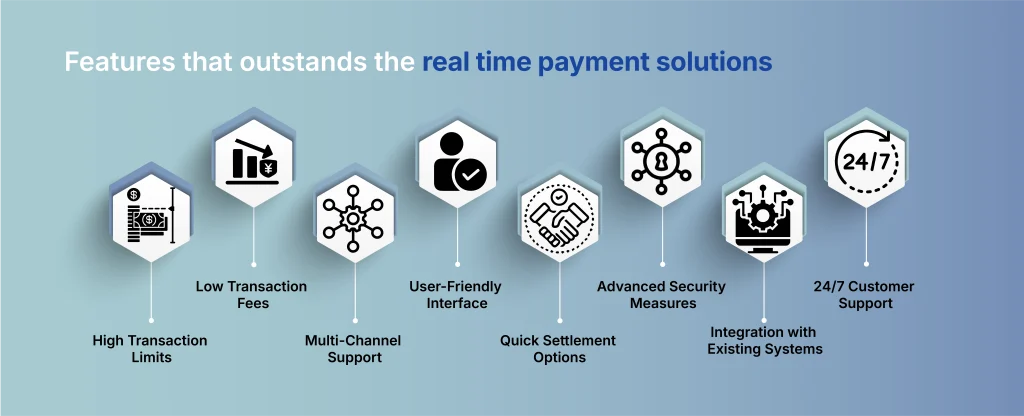
The defining features of leading payment solutions in 2025–2026 have expanded well beyond speed and convenience. Today’s platforms differentiate on several key dimensions:
- Speed: Transactions completed in under a second, supported by real-time rails like FedNow® and RTP® in the US, and UPI in India.
- Security: Advanced encryption, tokenization, multi-factor authentication, and biometric authentication — including fingerprint, Face ID, and palm-vein recognition.
- Interoperability: Open banking APIs enabling seamless integration across banks, fintechs, and e-commerce platforms.
- Global Reach: Multi-currency support and cross-border capabilities, essential for businesses operating internationally.
- AI-Powered Protection: Real-time fraud detection using machine learning, behavioral analytics, and anomaly detection.
The Role of Technology in Enhancing Transaction Speed and Security
The role of Artificial Intelligence (AI) and Machine Learning (ML) in payments has grown dramatically. Mastercard reported in 2025 that embedding generative AI across its fraud detection systems delivered up to a 300% improvement in detection rates. AI now monitors behavioral signals — device fingerprints, typing cadence, transaction history — to distinguish genuine users from fraudulent ones in real time.
Biometric authentication is also transforming the security landscape. By 2025, over 3 billion people were using biometrics for secure digital payments, with digital wallets featuring biometric capabilities dominating approximately 72% of mobile transactions. Contactless biometric payments are on track to account for roughly half of all global transactions, powered by advances in facial recognition, fingerprint scanning, and behavioral analytics.
Top Instant Payment Solutions of the Year
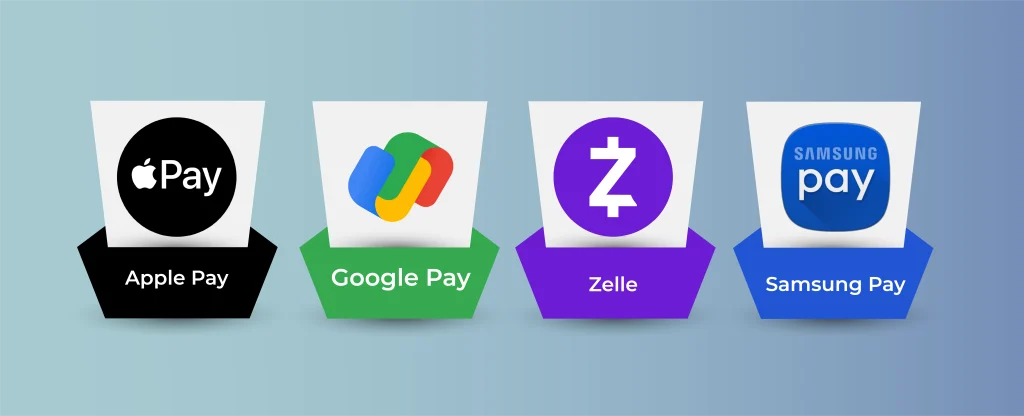
1. Apple Pay: Seamless Integration with the Apple Ecosystem
Apple Pay continues to set the standard for seamless in-ecosystem payments. Deeply integrated into iOS, macOS, and watchOS, it leverages Face ID, Touch ID, and Apple’s Secure Enclave to ensure that payment credentials never leave the device unencrypted. Apple Cash supports transfers of up to $10,000 per transaction, with up to $20,000 within a seven-day window, making it suitable for high-value personal payments. The platform is exclusive to Apple users in the US, but for that audience it delivers an exceptionally smooth and secure experience.
2. Google Pay: Versatile Digital Wallet for a Global Audience
Google Pay remains one of the most globally versatile digital wallets, deeply integrated with Gmail, Android, and the broader Google ecosystem. Unlike Apple Pay, it operates across Android and iOS devices and is accepted in dozens of countries. Its integration with UPI in India — where it operates as Google Pay UPI — has made it a dominant player in one of the world’s fastest-growing payments markets. The platform continues to expand its BNPL (Buy Now, Pay Later) capabilities and loyalty integrations.
3. Zelle: Simplifying Personal and Small Business Transactions in the US
Zelle has cemented its position as the go-to solution for instant bank-to-bank transfers in the United States. Integrated into over 2,000 banking apps, Zelle enables direct transfers between bank accounts with no added fees for most users. Transaction limits are set by individual banks, so users operating through major institutions can send higher amounts. In 2025–2026, Zelle expanded its small business support features, making it more viable for freelancers and micro-enterprises. One notable limitation: transactions are generally irreversible, so users must exercise caution.
4. Samsung Pay: Rewarding Transactions Across Terminals
Samsung Pay leverages both NFC and MST (Magnetic Secure Transmission) technologies, enabling it to work with virtually any payment terminal — including older magnetic-stripe readers that other platforms cannot support. Users earn cashback and bonuses at partner merchants through Samsung Rewards, adding a loyalty dimension to everyday spending. Samsung Knox provides device-level hardware security, and tokenization ensures raw card data is never transmitted.
Also Read: Integrating Loyalty Programs in Mobile Wallet
5. Stripe: The Developer-Favorite Payment Processor
Stripe has emerged as the leading payment processor for businesses and developers needing highly customizable solutions. Available in 42+ countries, it supports multi-currency billing, subscription management, and advanced analytics dashboards. Standard online processing is priced at 2.9% + $0.30 per transaction, with instant payouts available for an additional 1.5%. Stripe integrates seamlessly with Shopify, BigCommerce, WooCommerce, and thousands of other platforms, making it the backbone of countless e-commerce operations.
6. PayPal: The Global Trust Standard
With over 400 million active users worldwide, PayPal remains one of the most recognized and trusted names in digital payments. It supports credit card, debit card, and bank account transactions, and its subsidiary Venmo dominates the peer-to-peer space in the US — offering social payment feeds and Venmo Teen Accounts for younger users. PayPal’s Braintree platform serves as an enterprise-grade option with lower processing fees, advanced analytics, and Venmo acceptance, making it scalable for growing businesses.
Emerging Trends Reshaping Payments in 2026
UPI Goes Global
India’s Unified Payments Interface has set a global benchmark for real-time payment infrastructure. In December 2025 alone, UPI recorded 21.6 billion transactions — its monthly high — processing a value of ₹27.96 lakh crore. Crucially, UPI is no longer confined to India: its international expansion now connects it to payment networks in the UAE, Singapore, France, and other countries, allowing Indian travelers and businesses to transact abroad using the familiar UPI interface. The India Stack — combining Aadhaar identity infrastructure with UPI payment rails — is being studied as a model for financial inclusion by governments worldwide.
Biometric Authentication Becomes Mainstream
The shift from PINs and passwords to biometric authentication is accelerating rapidly. The RBI and NPCI in India now permit Aadhaar-based fingerprint or facial recognition for UPI transactions, allowing users to authenticate payments with a fingerprint or facial scan. Amazon One — the palm-recognition payment system — expanded into 12 new US cities in 2025 and entered the healthcare sector. Mastercard launched its Biometric Checkout Program in 2025, enabling fingerprint and facial recognition at POS terminals across multiple countries. The biometric payments market is projected to reach $34.8 billion by 2032.
AI-Driven Fraud Prevention
Fraud has become a baseline threat in the payments industry. North American financial institutions now incur more than $5 in total cost for every $1 of direct fraud loss. In response, AI-powered fraud detection has become table stakes. Visa uses AI analytics to prevent tens of billions in attempted fraud annually. Mastercard’s Decision Intelligence integrates behavioral biometrics — analyzing typing cadence, device fingerprints, and transaction history — to identify anomalies in real time. AI-driven biometric fraud detection implementations grew approximately 45% in 2025 across financial services.
CBDCs and Tokenized Money
Central Bank Digital Currencies are moving from pilot programs to broader experimentation, with over 130 countries (covering 98% of global GDP) now exploring or actively piloting CBDCs. India’s e-Rupee reached ₹1,016 crore in circulation by March 2025, with 60 lakh+ users across dozens of banks. Tokenization — already used in 70% of global e-commerce transactions to protect cardholder data — is becoming the foundational security layer for both traditional card payments and emerging digital currency systems.
Buy Now, Pay Later (BNPL) Integration with UPI
India’s BNPL market reached $24.86 billion in 2025 and is projected to hit $30.45 billion in 2026 at 22.5% growth. UPI-linked BNPL has grown at a 34.2% CAGR from 2022 to 2025 — RBI’s pre-sanctioned credit framework allows a UPI scan to tap into a credit line or EMI option without altering the familiar payment flow. This convergence of instant payments and embedded credit is creating powerful new opportunities for both consumers and businesses.
Comparative Analysis of Instant Payment Methods
Transaction Limits and Fees
When comparing instant payment methods, transaction limits and fees are crucial factors to consider. For instance, Zelle’s transaction limits are determined by the associated bank, while Google Pay and Apple Pay set their own limits. Understanding these limits ensures they align with your financial needs. Additionally, while Zelle and Google Pay do not charge additional transaction fees, services like Apple Cash and PayPal may impose fees for instant transfers or credit card transactions. Awareness of these costs can help you minimize unnecessary expenditures and choose the most cost-effective solution for your needs.
International Support and Currency Exchange
For cross-border commerce, platform selection is critical. Stripe supports 42+ countries with multi-currency billing. Wise (formerly TransferWise) offers transparent mid-market FX rates and a multi-currency wallet — making it ideal for B2B invoice payments with minimal exchange-rate markup. PayPal remains available in 200+ markets but may apply currency conversion fees that vary by country. Adyen, used by enterprises like Uber and Microsoft, supports 100+ currencies with unified acquiring and advanced risk management. Choosing a platform with transparent FX policies can result in substantial savings for businesses processing frequent international payments.
Security Measures and User Protection in 2025–2026
PCI DSS compliance remains the baseline. The European Union’s PSD3 framework, anticipated to take effect across multiple markets in 2026, extends open banking standards and mandates enhanced real-time payment safeguards. Two-factor authentication is now mandatory across most major platforms. Behavioral biometrics — analyzing how a user types, moves a mouse, or holds their phone — are being deployed alongside traditional authentication to create continuous, frictionless verification. RegTech platforms like Signzy and Perfios help businesses accelerate KYC and AML compliance using AI and machine learning.
Also Read: What are the Benefits and Challenges of Peer-to-Peer Payment Apps?
Choosing the Right Instant Payment Method
Factors to Consider Based on Your Needs
Selecting the ideal payment solution requires a clear-eyed assessment of your specific context. Key considerations include: transaction volume and average ticket size (which directly affects fee impact), geographic footprint (domestic-only vs. cross-border), the technical sophistication of your team (developer-friendly Stripe vs. no-code Square), security requirements (regulated industries may need advanced biometric and KYC capabilities), and whether you need embedded credit or BNPL functionality. There is no one-size-fits-all answer — the right platform depends on aligning all of these factors with your business model.
Compatibility with Business and Personal Use
For businesses, integrating a payment processor that offers out-of-the-box checkout, POS hardware, and accounting integrations can significantly reduce operational overhead. Square is well-suited for small brick-and-mortar businesses with its free POS software and transparent flat-rate pricing. Stripe is the preferred option for SaaS platforms and subscription businesses. Shopify Payments offers an all-in-one option for e-commerce merchants already on Shopify. On the personal side, Apple Pay, Google Pay, and Zelle remain the dominant choices for everyday consumer payments — each optimized for different ecosystems and use cases.
Evaluating User Experience and Customer Support
User experience remains a crucial differentiator. PayPal is often preferred by first-time users for its familiar interface, which reduces purchase abandonment. Stripe offers sophisticated developer tooling and analytics dashboards for teams that want to optimize their checkout funnel. For consumers, Apple Pay and Google Pay lead on simplicity — one tap to pay. When evaluating platforms, also consider the quality of customer support: Stripe and Square both offer 24/7 support across chat and phone, which can be critical when payment issues arise during high-traffic periods.
Final Thoughts
The instant payments landscape of 2025–2026 is defined by speed, intelligence, and inclusion. Platforms like Google Pay, Apple Pay, Samsung Pay, Zelle, Stripe, and PayPal continue to dominate — but the frontier has shifted to AI-powered fraud prevention, biometric authentication, real-time payment rails, and the global expansion of systems like UPI. The rise of CBDCs, BNPL embedded into everyday payment flows, and open banking APIs are creating an entirely new set of possibilities for both consumers and businesses.
Moving forward, it is imperative to consider not just the immediate benefits but also the broader implications of adopting these technologies — including regulatory compliance under frameworks like PSD3, and the evolving threat landscape where AI is being weaponized by fraudsters as aggressively as it is being deployed for protection.
Ready to tap into the future of payment technology? If you’re looking to create an instant payment solution that rivals the likes of Apple Pay or Google Pay, you’re in the right place. Consider partnering with Mindster, a leading fintech app development company, to bring your vision to life. With our expertise in mobile app development and digital wallet solutions, you can create a secure, efficient, and user-friendly payment system built for the demands of 2026 and beyond.

Professional content writer Akhila Mathai has over four years of experience. She writes posts about the different mobile app solutions we offer as well as services related to them. Her ability to conduct thorough research and think critically enables her to produce excellent, authentic, and legitimate content. Along with her strong communication abilities, she collaborates well with her teammates to create information that is current and relevant to emerging technology.

