
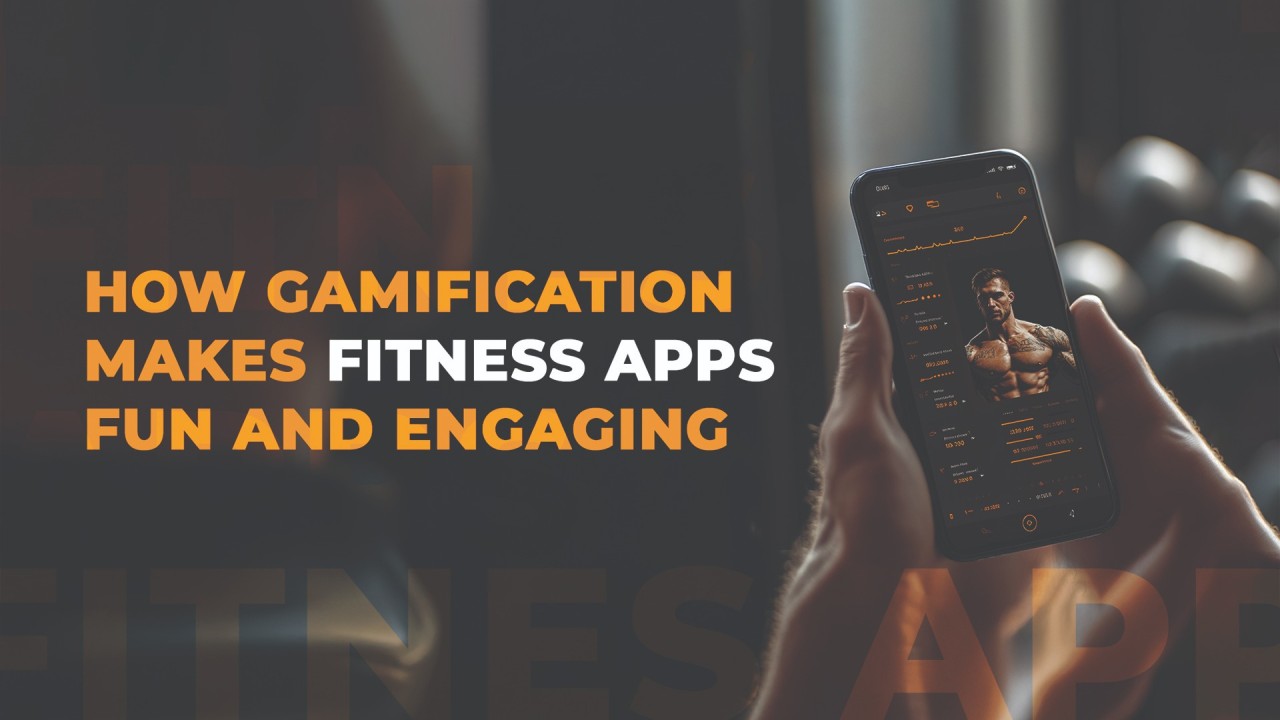
Fitness apps have changed how people approach health, and gamification has played a big part in that. 75% of mobile app users stay engaged with an app because of gamified elements, and fitness apps using these techniques have seen a 60% increase in user retention. But why does gamification work so well in fitness?
Let’s look at the key features, real examples, and what actually makes gamified fitness apps effective.
What Is Gamification in Fitness Apps?
Gamification means adding game-like elements — such as rewards, challenges, leaderboards, and progress tracking — to a non-game experience. In health and fitness apps, this makes working out more interactive and gives users a reason to keep showing up.
Earning points for finishing a workout, unlocking badges for hitting milestones, or competing with friends on a leaderboard are simple ideas that turn a routine task into something users look forward to.
Key Gamification Features in Fitness Apps
1. Rewards and Incentives
Apps like Fitbit and Strava let users earn badges or trophies for reaching milestones — finishing a 5K, hitting a weekly step goal, or logging a streak. Rewards give users a sense of progress and recognition, which keeps them coming back.
2. Challenges and Competitions
Individual and group challenges push users to do more. Peloton, for example, runs community challenges where users compete globally. Competition is one of the most consistent gamification examples fitness apps use to drive long-term engagement.
3. Leaderboards and Social Sharing
Leaderboards rank users by performance and encourage friendly competition. Apps like Nike Run Club let runners compare results with friends. Sharing milestones on social media also brings in new users and keeps existing ones motivated.
4. Progress Tracking and Feedback
Progress bars, charts, and streaks show users how far they’ve come. Seeing visible improvement reinforces the habit and is one of the most straightforward fitness app retention strategies that consistently works.
5. Storytelling and Virtual Adventures
Some apps go further by building a narrative around workouts. “Zombies, Run!” drops users into a story where they need to run to survive. It’s an unconventional approach, but it makes cardio genuinely engaging for users who find standard workouts dull.
6. AI-Powered Personalization
Modern health and fitness apps now use AI to analyze behavior, fitness levels, and dietary patterns to adjust workout and nutrition plans in real time. Rather than offering the same challenge to every user, these apps tailor the experience based on individual progress — which makes the gamification feel relevant rather than generic.
Learn How to Create a Fitness App in Just 6 Steps
Why Gamification Works in Fitness Apps
1. Motivation — Both Internal and External
Earning a badge or completing a challenge gives users personal satisfaction. Points, rankings, and rewards provide external motivation. Together, these give users multiple reasons to keep going.
2. Habit Formation
Consistent rewards and visible progress make users more likely to stick to their routines. Over time, the app becomes part of their daily habit rather than something they use occasionally.
3. Making Workouts Less Repetitive
Workouts become tedious when nothing changes. Gamification — new challenges, unlockable rewards, competitive goals — adds variety and keeps the experience fresh.
4. Community and Social Accountability
Challenges, leaderboards, and shared achievements give users a reason to interact with others in the app. That social layer adds accountability and makes users feel part of something bigger than a solo workout routine.
Case Study: How Fitreat Couple Scaled to 80,000+ Users
Fitreat Couple is a good example of what happens when gamification is backed by solid engineering.
Fitreat offers personalized, nutritionist-led fitness programs for specific needs — PCOD management, postpartum recovery, and couples fitness. As they grew past 80,000 users, their systems couldn’t keep up.
The Problems They Faced
- Client management was spread across multiple WhatsApp groups, which was hard to manage and easy to lose track of.
- The step tracker had a 40% failure rate on Android and iOS due to unreliable background syncing with Health Connect and Apple HealthKit.
- Manual calorie logging was the most common complaint — users found it tedious and often skipped it.
Each of these problems directly damaged the engagement loop that keeps users active in the app.
What Mindster Built
Mindster rebuilt the platform using Flutter and Laravel, and organized it into four separate portals — Customer, Trainer, Nutritionist, and Sales. On top of that, they added three key features:
- Session-Based Step Tracking: Instead of syncing steps in the background (which kept failing), the team switched to a session-based native pedometer using Apple HealthKit on iOS and Health Connect on Android. Step-tracking accuracy went from unreliable to 99.9%. Free users can now participate in step challenges — which also serves as an entry point for converting them to paid programs.
- AI Meal Recognition: Users photograph their meals and the AI pulls out the calorie and macronutrient breakdown automatically. This replaced a tedious manual process with something fast and easy, which increased how often users logged their meals each day.
- In-App Communication: All trainer-client and nutritionist-client communication moved into the app. This cut trainer and nutritionist admin time by 50% and gave users a more organized, personal experience.
Results
| Metric | Outcome |
|---|---|
| Active Users | 80,000+ globally |
| Nutritionist Admin Time | Reduced by 50% |
| Step-Tracking Accuracy | 99.9% |
| Top Source of Negative Reviews | Eliminated |
“A huge thank you to the Mindster team for the support in building the app. Really appreciate the effort.”
— Muhammad Shahid, Founder & CEO, Fitreat Couple
Fitreat shows that gamification only works when the app itself is reliable. A well-designed challenge or reward system means nothing if the step counter fails or calorie logging is too painful to bother with.
Read the full Fitreat Couple case study →
Benefits of Gamification — For Developers and Users
For App Developers
- Better retention: Users who are engaged stay longer and churn less.
- Organic growth: Social features encourage users to invite friends.
- More reviews: Users who enjoy the experience are more likely to leave positive feedback.
For Users
- Consistency: Gamified features make it easier to build and stick to a routine.
- Sense of progress: Rewards and tracking give users a clear picture of how they’re improving.
- Community: Challenges and leaderboards connect users with others who share the same goals.
Challenges of Gamification in Fitness Apps
Gamification isn’t guaranteed to work. Too much emphasis on competition can put off users who are less fit or just starting out. Features that feel forced — like badges that don’t mean anything or challenges that don’t match the user’s goals — add noise without value.
The Fitreat case also highlights a practical challenge: technical failure can undo even the best-designed engagement features. If the step tracker doesn’t work, the step challenge is pointless. Infrastructure matters as much as game design.
Where Gamified Fitness Apps Are Heading
- AR and VR Workouts: Some apps are experimenting with augmented reality routes and virtual group runs. While still early, the direction is clear — workouts that feel more like experiences.
- AI-Adjusted Challenges: Instead of the same challenge for every user, AI can set goals based on each person’s current level, history, and risk of dropping off. This makes challenges feel personal rather than one-size-fits-all.
- Wearable Integration: As smartwatches collect more data — heart rate, recovery scores, sleep quality — fitness apps can tie gamified goals to real health metrics, making the rewards feel more meaningful.
- Freemium Entry Points: Free challenges and basic tracking are becoming a standard way to bring users in before offering paid programs. Fitreat’s step challenges for free users follow exactly this model.
Final Thoughts
Gamification works in fitness apps because it gives users real reasons to keep showing up — not just a reminder notification. Rewards, challenges, and progress tracking address the core problem: staying consistent is hard, and anything that makes it easier has real value.
The apps that do this well combine good game design with technical reliability. Fitreat Couple is a clear example — fixing the step tracker and simplifying calorie logging made the gamification features actually usable, which is what drove growth.
If you want to build a fitness app that keeps users engaged beyond the first few weeks, we can help. Reach out to discuss your project.

Akhila drives the content strategy at Mindster, combining analytical clarity with a passion for digital product innovation. With a deep focus on mobile app strategy and software solutions, she bridges the gap between engineering complexity and intuitive user experiences. She thoughtfully articulates tech concepts, transforming frameworks, case studies, and digital transformation trends into actionable insights for product teams and business leaders.