Cut AI Costs by 90%: Why Smart Companies are Downsizing to Small Language Models (SLMs)

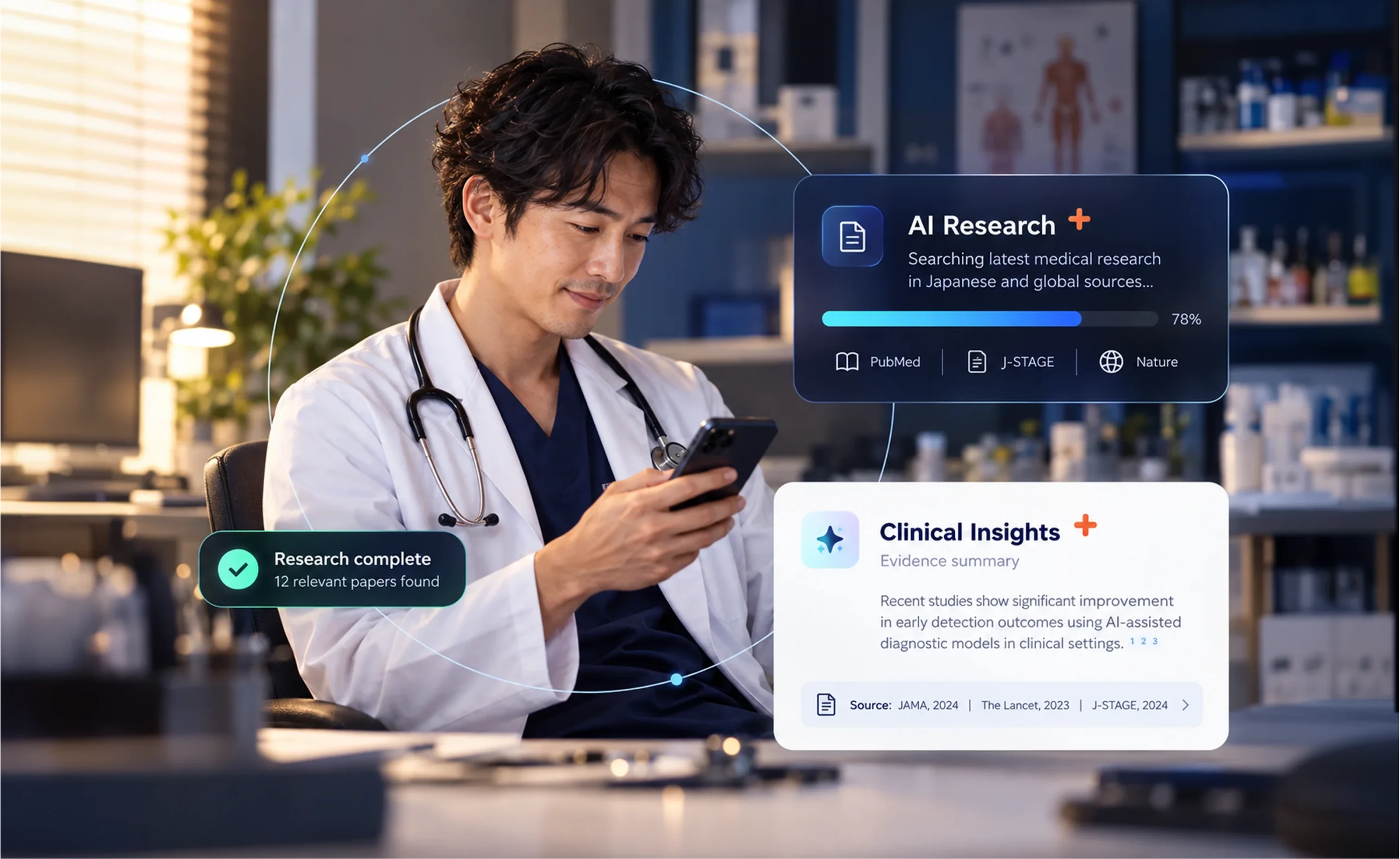
A Japanese healthcare technology provider wanted to extend their existing web-based medical research platform to mobile. Mindster built a cross-platform assistant that lets physicians ask questions, receive live AI responses, run deeper research in the background, and share cited findings when needed.
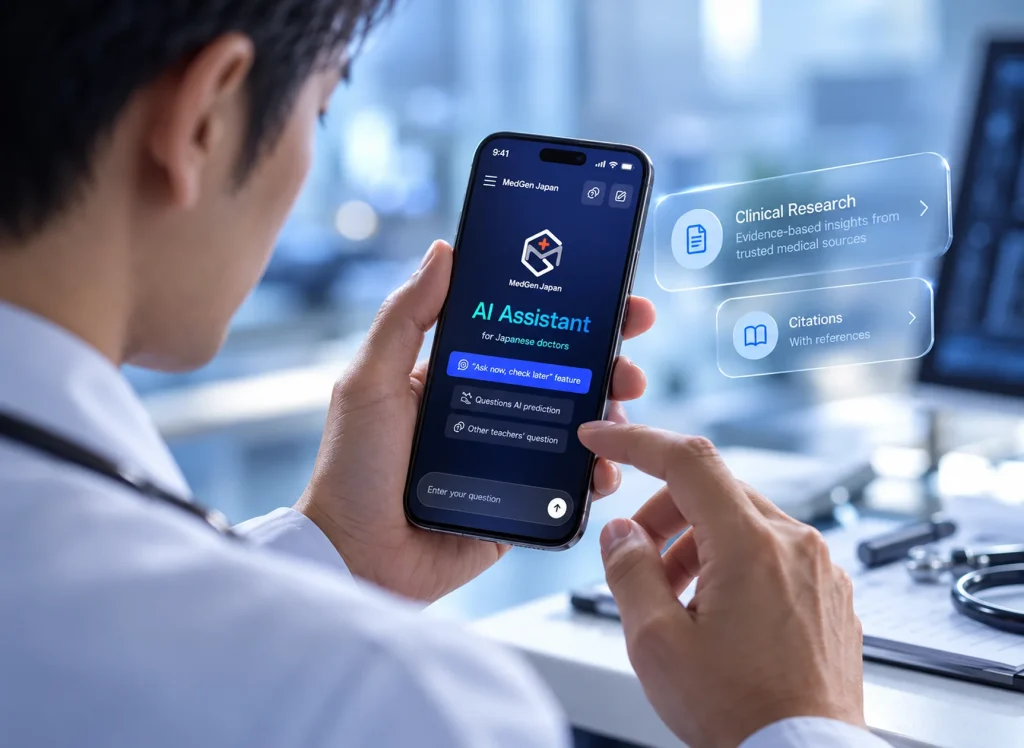
The client already had a web platform that brought together information from sources such as PubMed and domestic clinical guidance. Our app provided mobile experience and beyond at Physicians’ fingertips - for them to easily access insights during busy clinical routines, handle live AI conversations, longer research requests, citations with support for Japanese medical terminology and intermittent connectivity - in a way that felt practical for everyday use.
The Challenges
Moving an existing research-heavy experience to mobile introduced challenges that were less about adding features and more about keeping the experience dependable. Physicians need to be able to start a question, move between screens, lose connectivity briefly, and return to the task without losing context.
Hospital environments can involve weak or changing connections, especially when physicians move around – leading to unreliable network connectivity. A dropped connection could interrupt an active AI conversation or a critical interactive section involving a patient.
Some questions require deeper processing. Keeping physicians on the chat screen while this happened reduced the usefulness of the mobile and web app experience.
AI responses could include tables, citations, and formatted text depending on the clinical research details and response to questions. That content needed to remain clear and usable on smaller screens.
Standard mobile copy and paste could strip formatting and citation links, making it harder to share a useful clinical excerpt with colleagues, without impacting the reading experience.
Displaying complex domestic medical terminology and kanji requires precise typography mapping. The absence of a specialized localization pipeline led to unreadable layouts and layout shifting.
Forcing doctors to stay on an active chat screen while AI processing takes place in the background – caused significant operational delays and reduced software utility during busy shifts. Live AI responses and rich UI elements had to work together without making the app feel sluggish.
CLIENT REQUIREMENTS
The client didn’t just need an app; they needed a workflow transformation that could sit between their core ERP and the physical retail floor. The primary requirements were:
A mandate to eliminate physical invoice handovers and transition to a 100% digital “E-Invoice” workflow.
A system that could “grab” data from the ERP and instantly alert the packing and delivery teams the moment a payment was confirmed.
Moving away from verbal updates to automated WhatsApp and SMS notifications, providing customers with a “soft copy” of their invoice and live status alerts.
A way to manage customer flow using digital tokens that could be assigned, tracked, and reused across different retail outlets.
THE SOLUTION
Mindster extended the client’s existing AI capability into a mobile experience designed around how physicians use information: ask a question, review evidence, continue working while deeper research runs, and share useful findings with colleagues.
LIVE AI ASSISTANCE
A conversational mobile interface provides streaming answers as the AI response is generated, giving physicians immediate feedback.
Live responses
Answers appear progressively during the conversation.
Stable sessions
The app preserves the conversation when connectivity changes.
Cross-platform
The same experience works across iOS and Android.
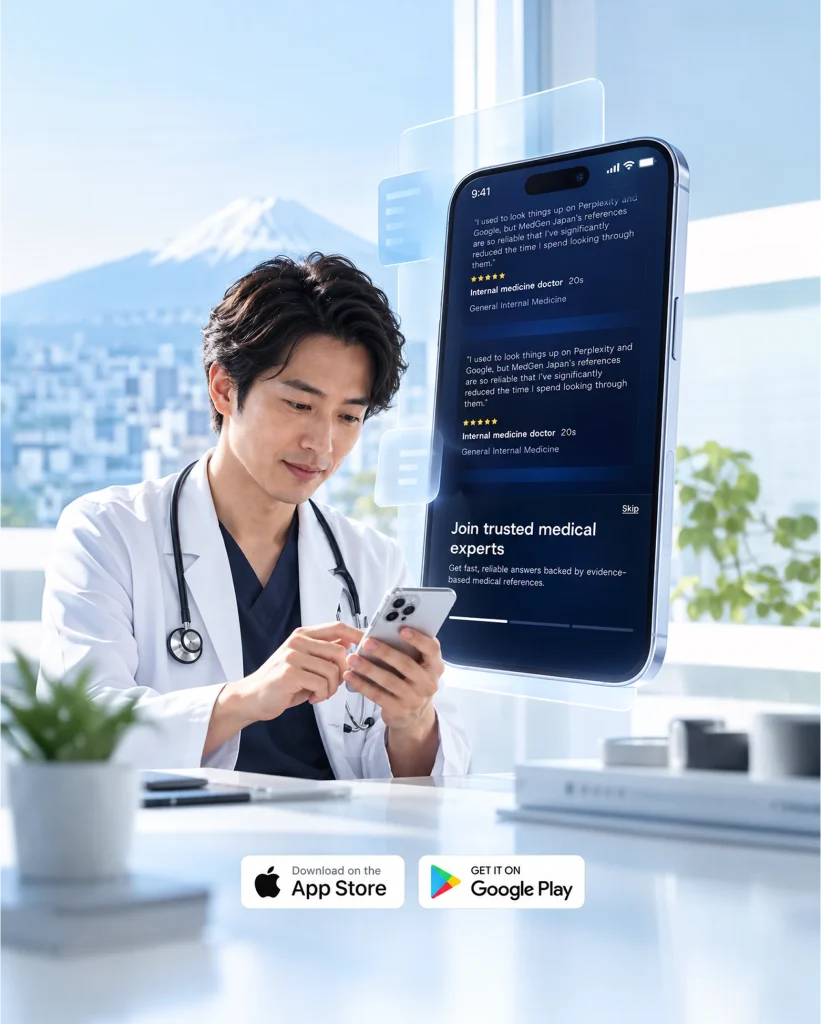
Figure 1 : AI-assisted healthcare mobile interface for real-time physician query support.
BACKGROUND RESEARCH
More involved research requests can continue in the background, so physicians do not have to remain on an active chat screen.
Multiple requests
Users can submit more than one research question.
Background processing
Longer tasks continue without blocking the mobile workflow.
Ready alerts
Push notifications signal when results are available.
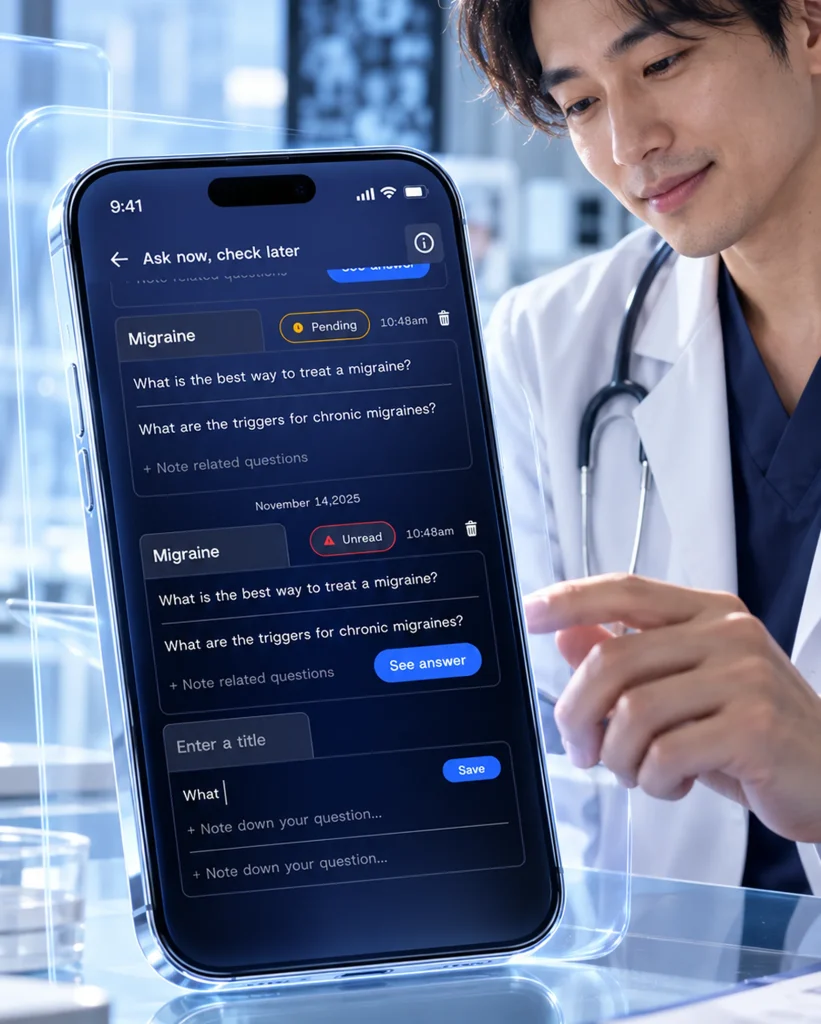
Figure 2 : Mobile interface displaying background research processing, queued clinical queries, and answer readiness alerts.
RELIABLE CONNECTIVITY
The application was designed to recover gracefully from temporary network interruptions.
Auto-reconnect
The app attempts to restore interrupted live sessions.
State preservation
The current conversation is retained during a connection drop.
Response recovery
Missing parts of a streamed answer can be recovered.
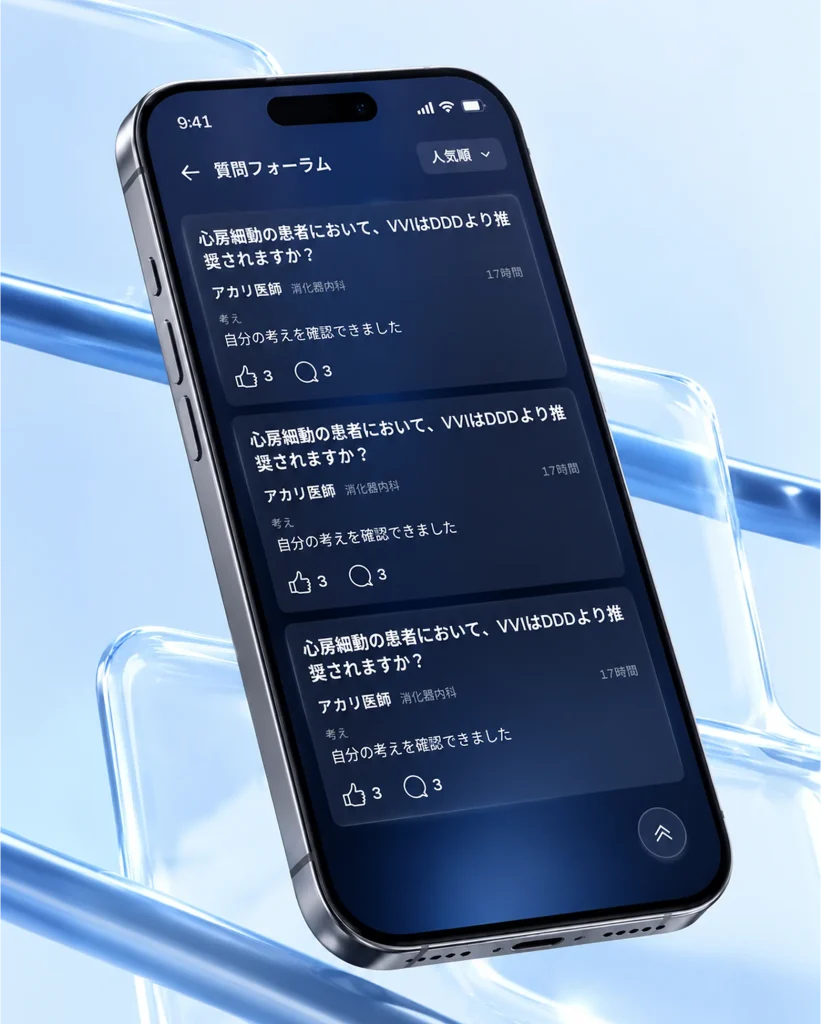
Figure 3 : Healthcare mobile app interface designed for changing network conditions and session preservation.
EVIDENCE & SHARING
Clinical responses remain structured and shareable, including tables, formatted content, and source citations.
Structured content
Medical tables and formatted responses remain readable.
Citation retention
Shared excerpts retain relevant source references.
Web access
Recipients can open shared excerpts outside the app. v
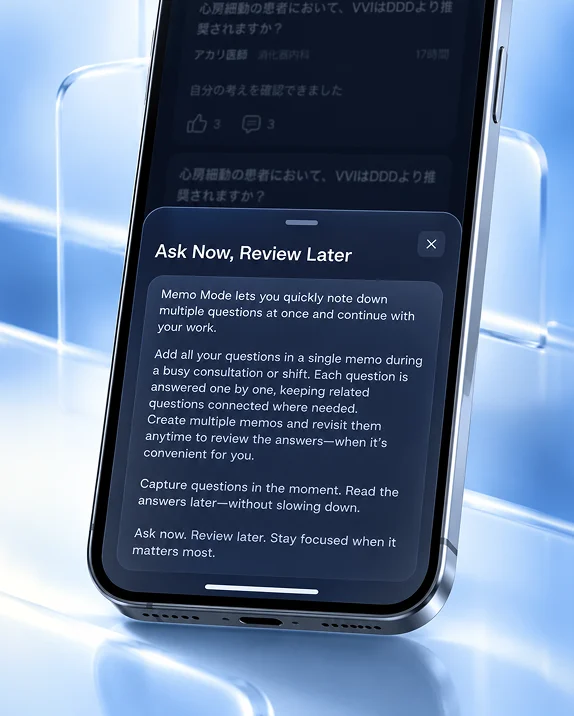
Figure 4 : Mobile interface for structured clinical notes, memo batching, and source citations.
Built on an enterprise-grade decoupled architecture using Flutter and Laravel to ensure frictionless mobile storefront performance and secure real-time data synchronization with core backend ERP systems.
| Strategic Component | Core Technology | Business Purpose |
|---|---|---|
| Mobile Front-End | Flutter | Provides store staff with a fast, high-performance UI on Android devices for frictionless scanning. |
| Backend Framework | PHP Laravel | Powers the core API layers, business logic engines, and automated multi-branch routing. |
| Database Engine | MS SQL Server | Delivers high-speed processing for complex inventory queries, batch jobs, and enterprise data consistency. |
| ERP Integration | Microsoft Dynamics API | Bi-directionally syncs sales invoices, inventory set-offs, and stock transfers in real time. |
| Real-Time Alerts | Firebase (FCM) | Guarantees zero communication lag by sending instant push notifications for warehouse triggers. |
| Access Control | Corporate Directory | Secures system access using strict employee ID authentication to create immutable audit trails. |
ARCHITECTURE OVERVIEW
The solution combines a Flutter mobile application with the client’s Django and AWS backend. Live conversations use WebSockets, while REST APIs support background work and history. The architecture separates the live data flow from screen rendering, so incoming AI responses do not unnecessarily disrupt the user interface.
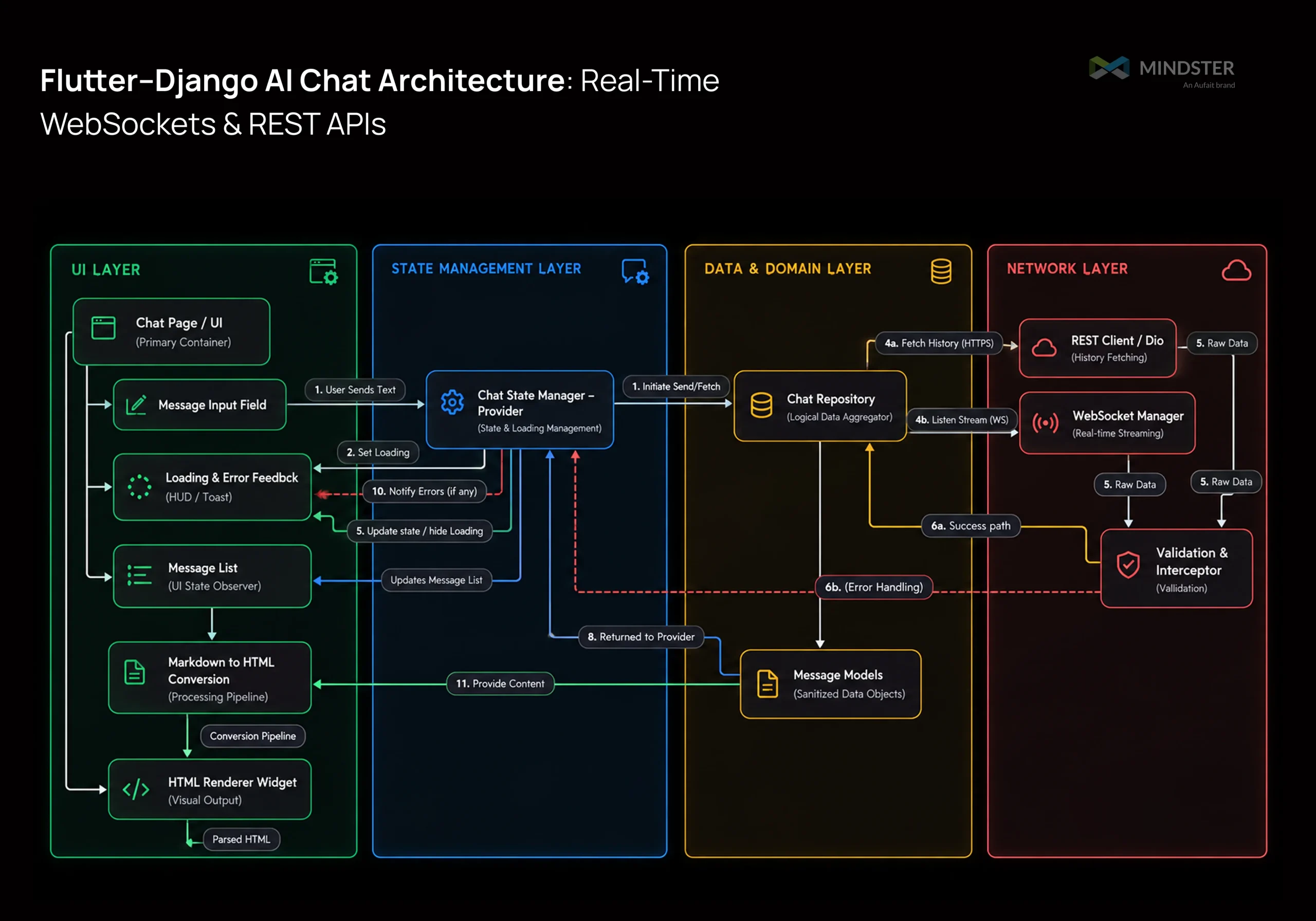
Figure 5 : System architecture of the Flutter–Django AI chat application, showing the interaction between UI components, state management, data models, and real-time communication services.
BUSINESS IMPACT
The mobile AI medical research assistant extended the client’s existing web application to iOS and Android, giving physicians mobile access to medical research, clinical information and citation-backed answers. The solution combines an AI chatbot for real-time medical queries with background research capabilities, structured clinical content and reliable mobile connectivity, making medical literature and research insights easier to access during busy clinical workflows.
The launch of the mobile medical AI assistant was followed by a 25% increase in physician onboarding within the first three months. By making the existing AI-powered healthcare research platform accessible through a dedicated mobile experience, the solution gave physicians a more convenient way to interact with AI-assisted medical research and evidence-based information.
The AI medical research platform brought the client's existing capabilities to mobile devices, allowing physicians to ask medical questions and review AI-generated research insights supported by sources such as PubMed and domestic clinical guidance. The mobile healthcare application also supports structured responses containing tables, formatted medical information and citations, helping physicians review research findings without losing important context.
The AI medical assistant supports longer and more complex medical research queries through background processing, with mobile notifications when the research response is ready. This creates a more practical workflow for AI-assisted clinical research and reduces the dependency on a continuously active chat session.
The mobile medical AI solution was designed to retain the structure and source context of AI-generated medical information when findings are shared. Formatted clinical content, tables and medical research citations can be preserved when physicians share relevant findings with colleagues, while web access allows recipients to review shared information outside the mobile application. This supports more effective medical knowledge sharing and evidence-based research collaboration
The value of healthcare AI depends not only on the model, but also on how easily professionals can access, review and use the information. Mindster can help turn an existing AI capability into a practical web or mobile experience.
CLIENT SUCCESS STORIES
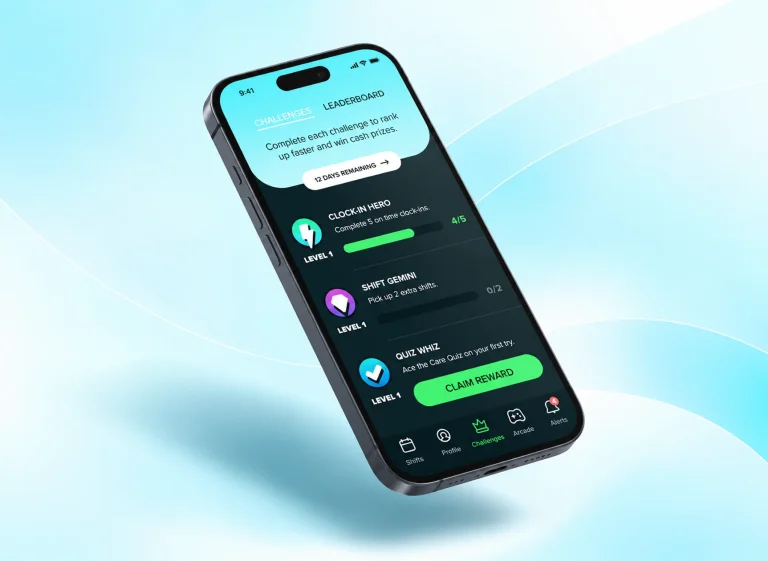
CareCrown is a multi-tenant home care scheduling and workforce management mobile application developed for independent healthcare providers using…
 Healthcare
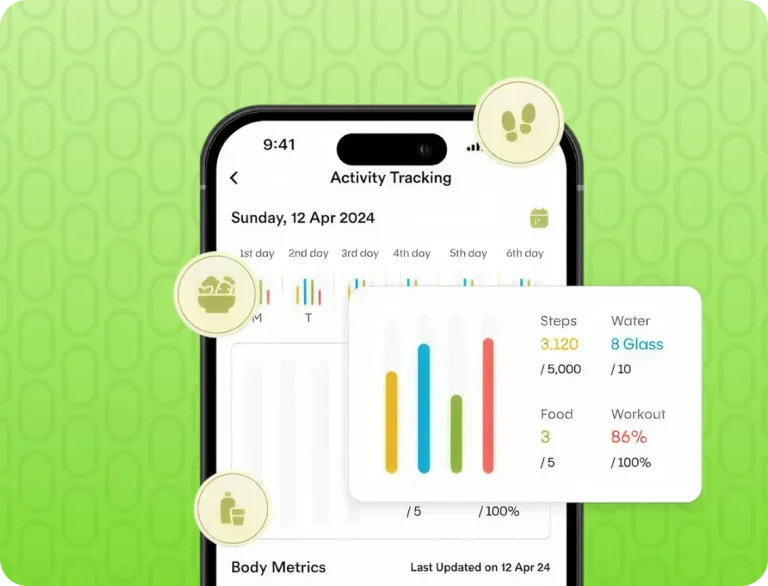
A personalized Health-Tech platform offering nutritionist-led programs, AI meal recognition, and reliable wearable syncing. It features specialized tracking…
 Healthcare
LATEST BLOG
FAQ'S
An AI medical research assistant helps physicians explore medical questions through an AI-powered interface. In this case, the mobile assistant extends an existing evidence-based healthcare research platform so physicians can ask questions, review AI-generated insights and access citation-backed medical information from sources including PubMed and domestic clinical guidance.
The solution connects the mobile experience to the client's existing medical research platform, which brings together information from sources such as PubMed and clinical guidance. The mobile interface presents AI research responses with structured content and citations so physicians can review the supporting medical sources.
Yes. The mobile medical AI solution supports background processing for longer research requests. Physicians can submit deeper medical research queries without remaining on the active chatbot screen and receive a notification when the results are ready.
Clinical applications should use data encryption, role-based access control, secure API communication, audit logging, and controlled data storage to protect medical information. Compliance should align with local security policies - Japan's APPI and MHLW's Healthcare Information System Safety Management Guidelines, which provide requirements for secure handling and management of healthcare information
The solution uses a custom content-sharing approach that retains formatting and source references when physicians select and share clinical findings. Shared content can also include a web link, so colleagues can access the relevant information outside the mobile medical AI application.
Clinical AI software can help physicians research medical questions, synthesize information from sources such as PubMed and clinical guidelines, and provide citation-backed insights for faster review.
An AI chatbot for doctors combines a medical knowledge or research backend with a secure conversational interface, real-time responses, evidence of citations, and reliable mobile or web access. The chatbot acts as the AI assistant helping physicians with critical searches and citations wherever necessary.
Get In Touch