
Cut AI Costs by 90%: Why Smart Companies are Downsizing to Small Language Models (SLMs)

Manual desktop solvers created critical scaling issues along with operational workflow bottlenecks. By modernizing these legacy tools into an automated web platform, the engineering team unlocked safe concurrent simulations—slashing validation cycles and accelerating time-to-market.

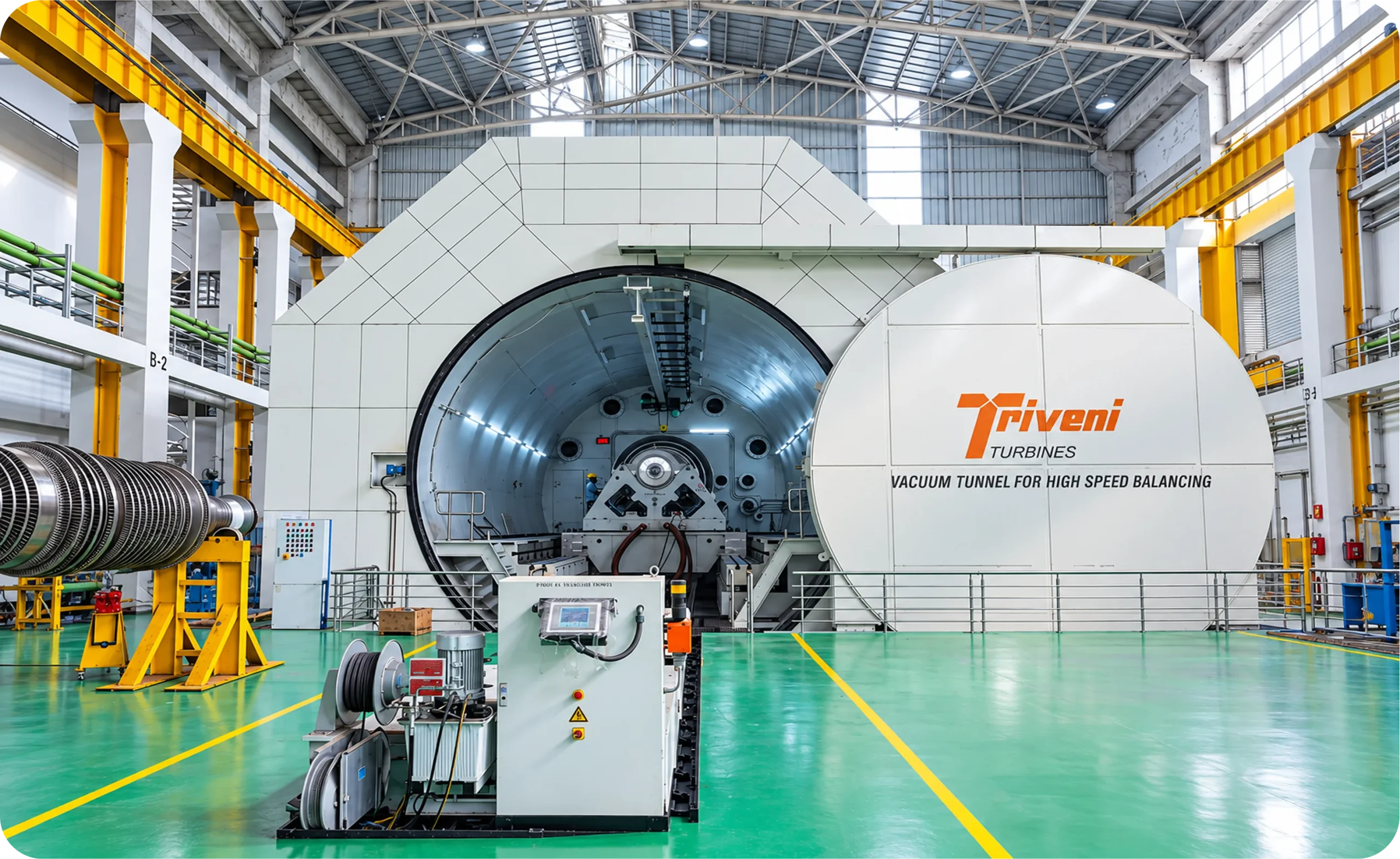
Headquartered in Bangalore, Triveni Turbines Limited is a global leader in industrial steam turbines. Their engineering division relies on complex simulations to validate mechanical designs. Our objective was to transform their fragmented, desktop-bound workflows into a unified, multi-user web ecosystem. We engineered a specialized architecture that encapsulates command-line scripts into structured wrappers. By optimizing parallel processing, data mapping, and directory controls, we empowered engineers to execute and compare concurrent simulations without operational conflicts.
The Scope
Triveni Turbines needed to modernize their simulation infrastructure without rewriting their core legacy computational engines. The mandate required:
Wrap legacy command-line scripts into a centralized, user-friendly digital dashboard.
Enable multiple engineers to run complex mechanical simulations simultaneously without file crashing or data cross-contamination.
Automatically map the data output of one solver directly into the input of the next solver without manual file transfers.
The Challenges
Migrating single-user desktop executables into a shared enterprise environment created critical architectural bottlenecks, risking data corruption, system crashes, and offline deployment failures, which we addressed without impacting performance.
Legacy solvers designed for local desktops caused immediate file conflicts, data corruption, and system crashes when forced into parallel execution on a shared server.
The legacy tools required manual inputs or triggered command prompts during execution, halting automated backend lifecycles and trapping vital processing threads.
Fixed path structures and Windows character limits caused random script failures when executables were deeply nested inside modern database directory trees.
Multi-stage pipelines required output from one solver to feed directly into another, originally demanding tedious manual file redirection that broke automated flows.
A complete lack of external network or CDN access during implementation blocked standard installation paths, resulting in severe peer dependency mismatches.
The absence of structured log outputs and uncaptured terminal streams left engineers entirely incapable of tracking active job progress or diagnosing failures.
THE SOLUTION
To eliminate single-user processing delays, Mindster re-architected Triveni’s manual workflows into a concurrent, on-premise web platform. We replaced brittle direct desktop based executions with web based asynchronous task handling, allowing multiple engineers to run and chain heavy simulations simultaneously.
SECURE DEPLOYMENT
We engineered a robust system to encapsulate command-line parameters into standardized digital processes.
Standardized Core Wrappers
Drives dynamic environment setup and UI prompt suppression.
Tailored Flow Mapping
Accommodates highly volatile, inconsistent legacy solver input formats.
Active Log Extraction
Intercepts terminal lines dynamically for clean, historical data capture.
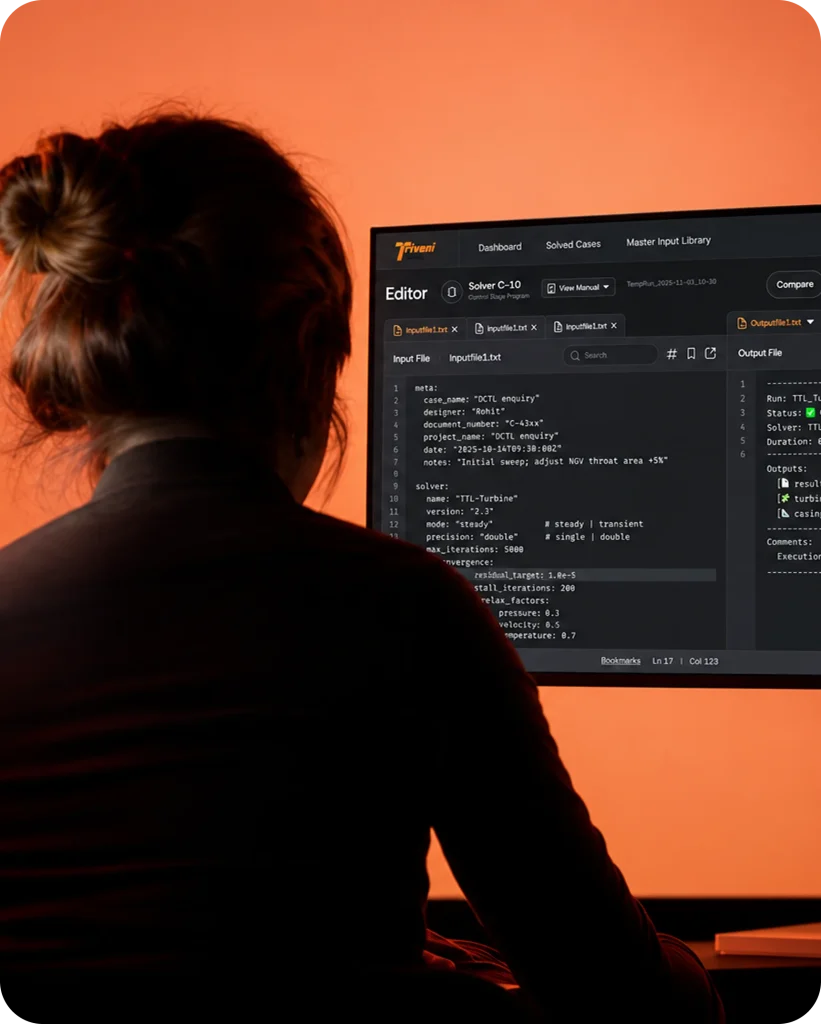
Figure1: setting up numerical solver parameters and NGV throat area adjustments for a turbine simulation
ERROR RECOVERY
A non-blocking operational backbone built to safely scale workload distribution across multi-user environments.
Asynchronous Processing with Celery
Offloads incoming workloads to an elastic queue, preventing UI thread locking.
Redis Distributed Locks
Enforces strict concurrency gates, totally eliminating data corruption and simultaneous file access errors.
Chained Process Channelling
Passes data payloads from one solver directly into another without manual intervention.

Figure 2: Triveni dashboard and solved cases overview.
DATA INTEROPERABILITY
Custom presentation layers developed entirely within restricted network environments to meet strict security protocols.
Localized Library Bundling
Bypasses public package reliance via manually structured, strict-version local modules.
Offline DXF Rendering
Integrates a tailored drawing viewer engine, optimizing client-side browser performance for heavy multi-layered CAD vectors.
Customized Input Editors
Extends React input modules with domain-specific formatting for specialized math inputs.
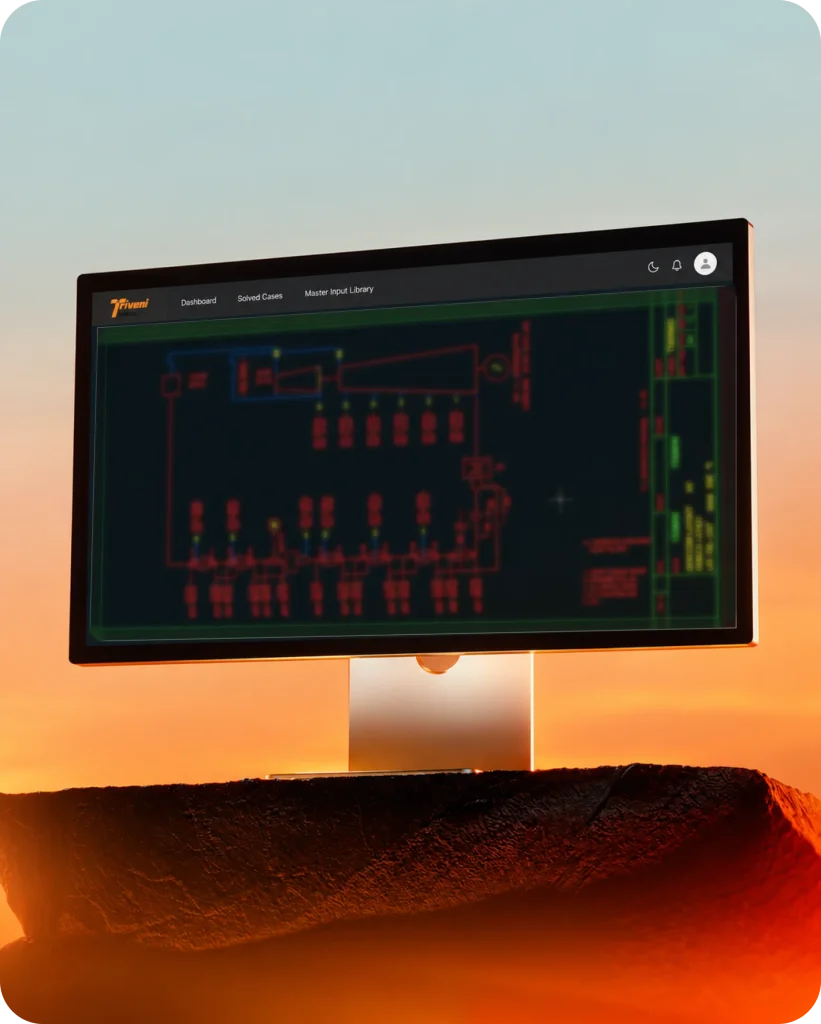
Figure 3: Air-Gapped Frontend presentation layer features and CAD viewer integration.
Solution Architecture
The modernized system architecture bridges a React frontend with legacy mechanical solvers. By leveraging a Django API, Redis task queues, and Celery workers, the platform safely orchestrates concurrent simulation workflows at scale.
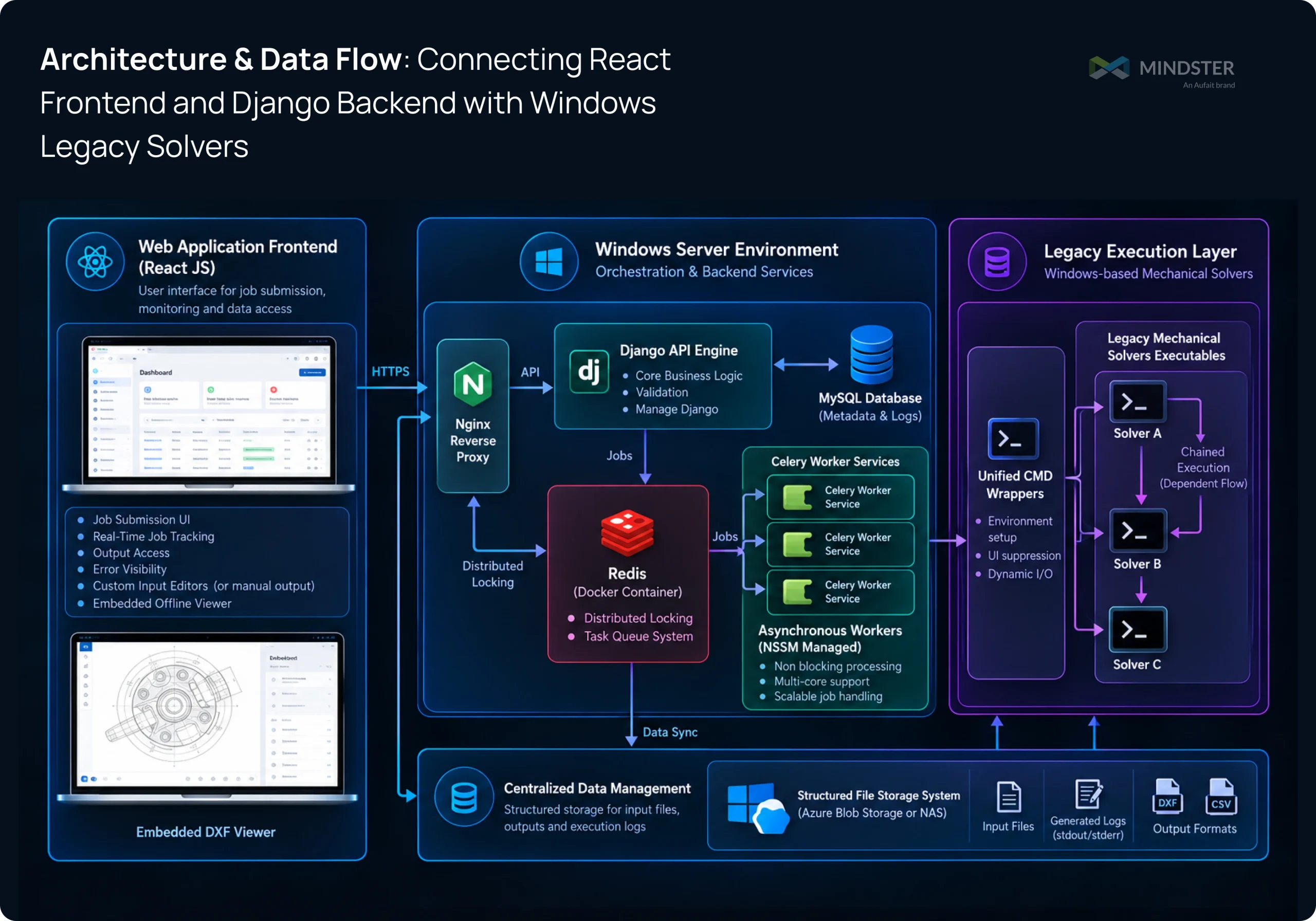
Figure 4: Data orchestration from the React user interface through the Django API engine to the legacy mechanical solvers
Mindster engineered this automated platform using React for the interactive UI and Django for API orchestration. Asynchronous task queues powered by Celery and Redis allow Windows Server to safely execute heavy mechanical solvers concurrently.
| CATEGORY | TECHNOLOGY | STRATEGIC APPLICATION |
|---|---|---|
| Frontend Framework | React JS | Delivers an immersive, responsive frontend layout dedicated to single-screen job tracking and parallel comparison viewports. |
| Backend Engine | Django / Waitress WSGI | Governs core API requests, authenticates file routing, and acts as the central orchestrator for terminal jobs. |
| Asynchronous Worker | Celery | Processes computational jobs asynchronously as background services, preventing application freeze during long tasks. |
| Locking & Message Broker | Redis (Dockerized) | Operates as the high-speed task broker and handles distributed system locks across identical files. |
| Database Storage | MySQL | Retains system operational records, detailed execution parameters, file-path maps, and active status updates. |
| Service Manager | NSSM (Non-Sucking Service Manager) | Embeds and manages the Django/Celery runtime daemons as native, resilient Windows Background Services. |
| Network Security | Nginx Reverse Proxy | Acts as the primary application proxy gateway, managing secure routing profiles for local network clients. |
| CAD Presentation | Offline DXF Viewer Component | Parses and draws physical model geometry straight into the client browser layout without network leaks. |
RESULTS & MEASURABLE IMPACT
The centralized web architecture eliminated single-user and machine bottlenecks, enabling Triveni Turbines to scale operations and shorten design cycles.
By safely enabling multi-user concurrent processing on a shared platform, the engineering team successfully increased net simulation throughput by 4x without system crashes.
Utilizing standardized input templates and custom data editors significantly reduced manual configurations, driving a 40% improvement in per-resource processing efficiency.
By automating manual workflow chaining and data mapping, the platform drastically reduced mechanical validation times, directly accelerating the enterprise time-to-market.
The fully air-gapped web architecture ensures highly sensitive intellectual property and proprietary steam turbine designs remain strictly isolated from external networks.
Replacing terminal commands with a structured React dashboard removed human input errors, ensuring perfect data consistency across all complex mechanical design iterations.
Stop letting legacy desktop bottlenecks slow down your engineering cycles. Partner with Mindster to build a scalable, concurrent web platform that accelerates time-to-market and protects your proprietary IP.
CLIENT SUCCESS STORIES
LATEST BLOG
FAQ'S
In situations where the legacy system rewriting is difficult / not practical, we proceed with a wrapper architecture rather than rewriting the core legacy code. We build a modern backend layer (using frameworks like Django) that safely executes your existing command-line tools in the background. A web frontend (like React) then acts as the user control panel, passing parameters to the engine and displaying the generated results.
We utilize asynchronous task queues (like Celery) and distributed locking mechanisms (like Redis). When multiple engineers submit jobs, this architecture intercepts the simultaneous requests, queues them, and allocates isolated processing threads. This prevents the file cross-contamination and system crashes typical of legacy local setups.
Yes. We design automated workflow pipelines that programmatically map the data output of one solver directly into the input parameters of the next. This eliminates tedious manual file redirection, reduces human error, and drastically accelerates the overall validation lifecycle.
Absolutely. For enterprises with strict IP security requirements, we develop the web ecosystem to run entirely offline. By bundling all library packages locally and utilizing custom offline rendering components, the platform operates independently of any external internet or CDN access.
React provides a highly responsive, component-based interface ideal for complex data visualization, customized math inputs, and parallel comparison viewports. Django offers a highly secure, robust backend capable of deep system-level orchestration, making it perfectly suited to manage heavy, long-running computational processes natively on Windows Server environments.
Get In Touch