

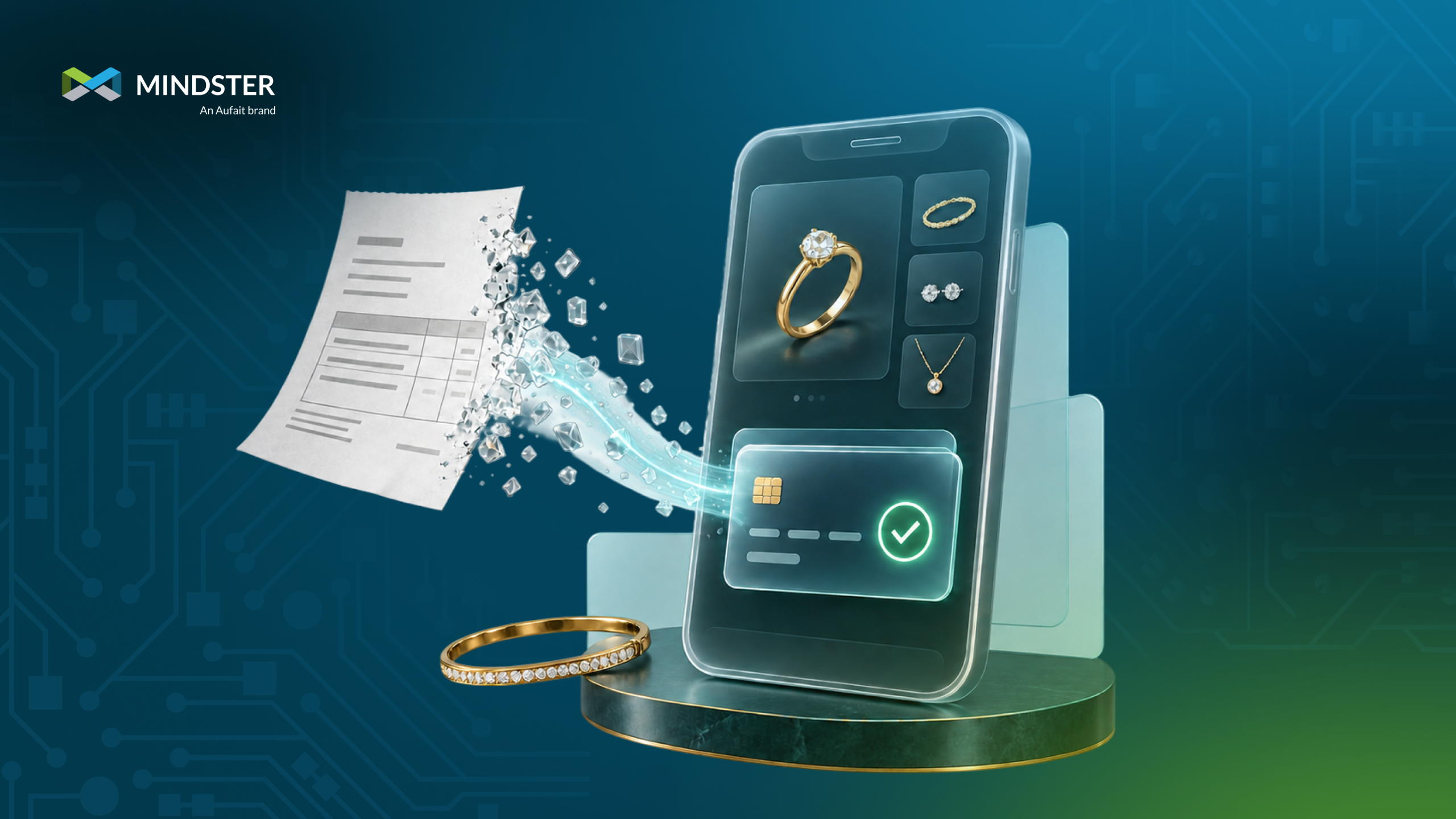
Independent jewelry retailers are moving to B2B mobile apps with embedded financing because traditional desktop invoicing can't keep pace with live gold rates, manual credit approvals, and disconnected payment reconciliation — all of which slow down cash flow. Modern apps combine instant credit-line checks, split payments, and real-time gold-rate calculation into a single checkout step.
If your retailers keep asking why a competitor’s app lets them check credit and place an order in the same tap, you’re not imagining the shift — you’re living it.
For decades, wholesale jewelry buying meant a desktop ERP, a manually typed invoice, a phone call to negotiate credit, and a cheque settled days later — with gold rates checked separately and matched by hand. That’s changing fast, and independent retailers are driving it. Thin cash cycles leave no room for slow, paper-heavy billing, and they’re voting with their orders: suppliers who make buying fast and financially flexible get repeat business, while desk-bound competitors quietly lose share.
What retailers want now is one screen — invoice, credit line, payment split, and gold rate, all live. It’s not a five-year roadmap item; it’s already being built. This blog covers why the shift is happening, what it looks like in practice, and how to get there without tearing out the ERP you already trust.
Why Traditional Invoicing Is Losing the Wholesale Jewelry Trade
Traditional invoicing in jewelry wholesale was never just about generating a bill. It was a coordination exercise between sales staff, accounts teams, and the retailer, usually spread across phone calls, physical paperwork, and a desktop system that only one person in the office knew how to operate.
The Core Pain Points Driving the Shift
- Rate volatility isn’t reflected instantly. Gold and silver prices move multiple times a day. A desktop system that updates rates once in the morning creates a mismatch between the quoted price and the actual market price by the time the invoice is finalized.
- Credit approval is a manual bottleneck. Independent retailers typically buy on credit from multiple suppliers. Each supplier runs its own informal credit check, often a phone call to a manager, before an order is confirmed. This can take hours, sometimes days.
- Desktop software chains the transaction to a location. Traditional ERP or billing software is installed on one machine, usually in a back office. A sales rep visiting a retailer, or a retailer visiting a trade fair, has no way to raise or approve an invoice without physically being at that desk.
- Payment is a separate, disconnected step. Cheques, NEFT transfers, and part-payments in cash are recorded manually, then reconciled later — often at month-end — creating a lag between what a retailer owes and what the ledger shows.
- Reconciliation errors compound at scale. A single manual entry error in weight, rate, or making charges can throw off an entire ledger, and by the time it’s caught, it has usually been carried across several more invoices.
What Changed on the Retailer’s Side
Independent retailers aren’t rejecting invoicing itself, they’re rejecting the friction around it. Three shifts made that friction unacceptable, and they’re worth understanding because each one is a reason your retailers will switch suppliers if you don’t address it:
- Smartphones became the primary business device. Retailers now run WhatsApp orders, UPI payments, and inventory checks from their phones. A supplier’s desktop-only billing tool feels like a step backward and a supplier who feels like a step backward gets a shrinking share of the order.
- Gold price sensitivity increased. With gold prices seeing sharper daily swings over the past few years, even a delay of a couple of hours between quoting and billing can mean a real difference in margin. Retailers now actively seek out suppliers who protect that margin for them.
- Cash flow pressure intensified. Rising input costs and tighter personal lending norms have made short-term credit at the point of purchase far more valuable than a discount or a loyalty point. Whoever extends that credit instantly, without a phone call, wins the order.
The takeaway for manufacturers and wholesalers is straightforward: this isn’t a “nice-to-have” feature request. It’s the new baseline retailers are screening suppliers against before they even place a first order.
The New Expectation — Financing as a Checkout Feature, Not a Back-Office Process
“Embedded B2B financing refers to credit, split-payment, and real-time pricing tools built directly into a wholesale ordering app’s checkout flow, rather than handled separately through phone calls, manual approvals, or offline reconciliation.”
The demand isn’t for a faster invoice. It’s for an invoice that already knows how much credit the retailer has, what portion of the bill can be split, and what the gold rate is at that exact second.
Instant Credit Lines at the Point of Order
Retailers want their available credit limit visible the moment they open the app — not after a call to accounts. This means:
- Credit limits calculated dynamically based on outstanding dues, repayment history, and order frequency.
- Automated approval for orders within the pre-set limit, with human review reserved only for exceptions.
- Real-time visibility into how much of the credit line is already utilized, so the retailer can plan the next order without guesswork.
Split Payments Built Into the Bill
A single invoice rarely gets settled in one payment mode anymore. Retailers want to combine part cash, part credit, part digital payment — all logged against one invoice number, not three separate entries that need to be reconciled by hand later.
Real-Time Gold-Rate Calculation at Checkout
This is the feature independent retailers mention most often. They want the invoice to pull the live gold rate the moment the transaction is confirmed, automatically calculate making charges, wastage, and GST on top of it, and lock that final number — removing the back-and-forth of “let me check today’s rate and call you back.”
80% Less Manual Work Is Already Possible
See how a leading jewelry retailer digitized invoicing and cut store-level workload dramatically in months.
Read the Full StoryA Practical Model — What This Looks Like in a Working Jewelry ERP
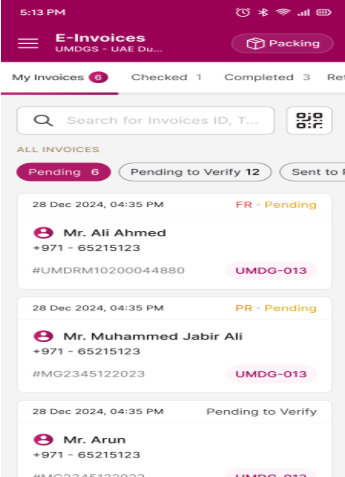
Digitizing invoicing at scale is not a theoretical exercise. Malabar Gold & Diamonds, one of the world’s largest jewelry retailers with over 350 outlets across 13 countries, moved away from a paper-based billing and packing process for exactly the reasons independent retailers are now raising: slow handovers, zero real-time visibility, and chaos during high-volume periods.
Their manual process required a printed invoice to physically travel from the sales counter to billing to packing a “walking minutes” delay that added up to hours of lost productivity daily, especially during festive rushes like Akshaya Tritiya and Dhanteras.
The digitized solution built by Mindster replaced this with a real-time system connecting the core ERP to Flutter-based staff apps:
| Old Process | Digitized Process |
|---|---|
Printed invoice carried by hand between counters
| E-invoice fetched instantly from ERP the moment a sale is locked
|
Verbal status updates, customer has to ask | Automated WhatsApp/SMS alerts at token assignment, payment, and collection
|
Paper token slips, prone to loss during rush
| Dynamic digital token, auto-released and reused in real time
|
Manual filing, no audit tra | Digital signature capture, archived automatically for audit readiness
|
H3: Measurable Impact
- 80% reduction in manual store-level workload, as staff were freed from physically relaying paperwork between departments.
- 100% paperless billing-to-packing workflow across outlets.
- Over 60% drop in status-inquiry interruptions at the counter, since customers received automated updates instead of asking staff directly.
This is the same underlying architecture principle that built-in financing extends further: connect the ERP, the mobile app, and the payment layer into one real-time loop, so nothing — not the rate, not the credit check, not the payment split — waits on a manual step. If a global retailer with 350+ outlets can eliminate that friction without disrupting its core ERP, a mid-sized manufacturer or wholesaler can too — and usually faster, because there’s less legacy complexity to untangle.
How B2B Jewelry Apps Are Being Rebuilt Around This Demand
1. ERP-Connected, Not ERP-Replacing
Retailers and manufacturers alike are wary of ripping out systems they’ve relied on for years. The winning approach is middleware — a mobile and web layer that sits on top of the existing ERP, fetching and pushing data in real time without forcing a risky core system overhaul.
2. Credit Scoring Built From Transaction History
Instead of a one-time manual credit approval, modern platforms calculate a rolling credit score from:
- Repayment punctuality on past invoices
- Average order value and frequency
- Outstanding dues versus credit limit utilization
- Seasonal buying patterns (festive stocking vs. regular restocking)
3. Live Rate Feeds Wired Directly Into Billing
Gold and silver rates are pulled from a live feed and locked into the invoice at the exact moment of confirmation, with making charges, wastage percentage, and applicable GST calculated automatically on top.
4. Multi-Mode Settlement in a Single Transaction Record
UPI, credit line, part-cash, and bank transfer are captured against one invoice ID, closing the reconciliation gap that used to appear at month-end.
5. Offline-First Design for Real-World Retail Conditions
Trade fairs, basement showrooms, and rural outlets don’t always have reliable connectivity. Billing, token assignment, and validation need to work offline and sync automatically the moment a connection returns — because a jewelry showroom cannot afford to stop operating over a dropped signal, and neither can you afford to lose an order because your app did.
The Bottom Line for Manufacturers and Wholesalers
None of the five capabilities above require a leap of faith. Each one is already running in production jewelry platforms today. The only real decision left is how quickly you move — because every restock cycle your retailers spend fighting your invoicing process is a restock cycle a faster-moving competitor is quietly winning.
The Behavioral Shift, By the Numbers
The chart below illustrates the shift in what independent retailers say they prioritize when choosing a B2B ordering platform, based on the patterns emerging across recent jewelry trade digitization projects.
Retailer Priorities: Legacy Desktop Billing vs. Modern B2B App Expectations
| Priority | Legacy Desktop Billing | Modern B2B App Demand |
|---|---|---|
Invoice generation speed | Minutes to hours | Instant |
Credit approval
| Manual, phone-based
| Real-time, algorithmic
|
Gold rate accuracy at billing
| Fixed rate, updated periodically
| Live rate locked at checkout
|
Payment settlement | Single mode, manually logged
| Split payments, auto-reconciled
|
Access
| Desk-bound
| Mobile, anywhere
|
Audit trail
| Paper-based, error-prone | Digital, instant, exportable
|
This table reflects a pattern seen consistently across large-format jewelry retail: the friction points aren’t about the invoice itself, they’re about everything that used to surround it.
Final Thoughts
The death of traditional invoicing in the jewelry trade isn’t about replacing paper with a PDF. It’s about collapsing three separate, slow processes — rate checking, credit approval, and payment reconciliation — into a single real-time action inside a mobile app. Independent retailers pushed for this shift because their cash cycles and margins simply couldn’t absorb the delays anymore. Large retailers like Malabar Gold & Diamonds have already proven the operational upside of removing manual handovers at scale.
If you’re a manufacturer or wholesaler weighing whether this is worth building, the honest answer is that your retailers have already made the decision for you — they’re ordering from whoever makes it easiest. The question left is simply who they’ll choose: you, with a financing-embedded app built around how they actually buy, or a competitor who got there first. Mindster has already built this exact architecture for jewelry retailers operating at scale, which means you don’t have to start from a blank page — you can start from what already works.
Modernize Checkout Without Replacing Your ERP
Add embedded financing and real-time rates through a connected layer, no risky system overhaul required.
Talk to Our Team
Akhila drives the content strategy at Mindster, combining analytical clarity with a passion for digital product innovation. With a deep focus on mobile app strategy and software solutions, she bridges the gap between engineering complexity and intuitive user experiences. She thoughtfully articulates tech concepts, transforming frameworks, case studies, and digital transformation trends into actionable insights for product teams and business leaders.