
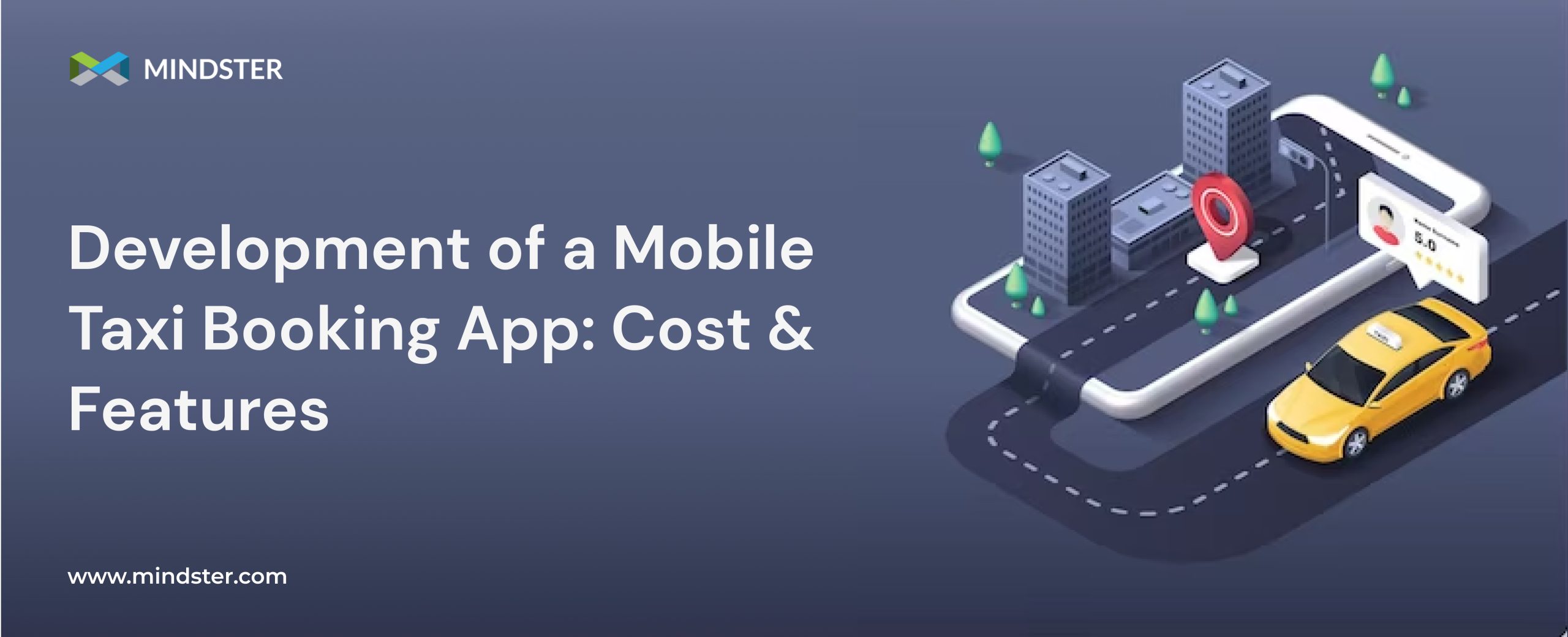
For business owners wishing for their company to multiply, Development of a mobile taxi booking app are a great idea. These taxi reservation apps act as a link between passengers and drivers. Instead of hailing a taxi at the last minute, people prefer to use cabs that may be reserved in advance.
As a result, online on-demand taxi booking applications have increased in popularity globally among smartphone users.
Numerous businesses have created multiple taxi booking apps, each one being distinctive. The availability of features for drivers and passengers is crucial to developing this business.
What is a Taxi Booking App?
Development of a taxi booking app have become more popular due to the dedication and tenacity of mobile app development companies. Therefore, when reserving transportation, one may rely on them entirely.
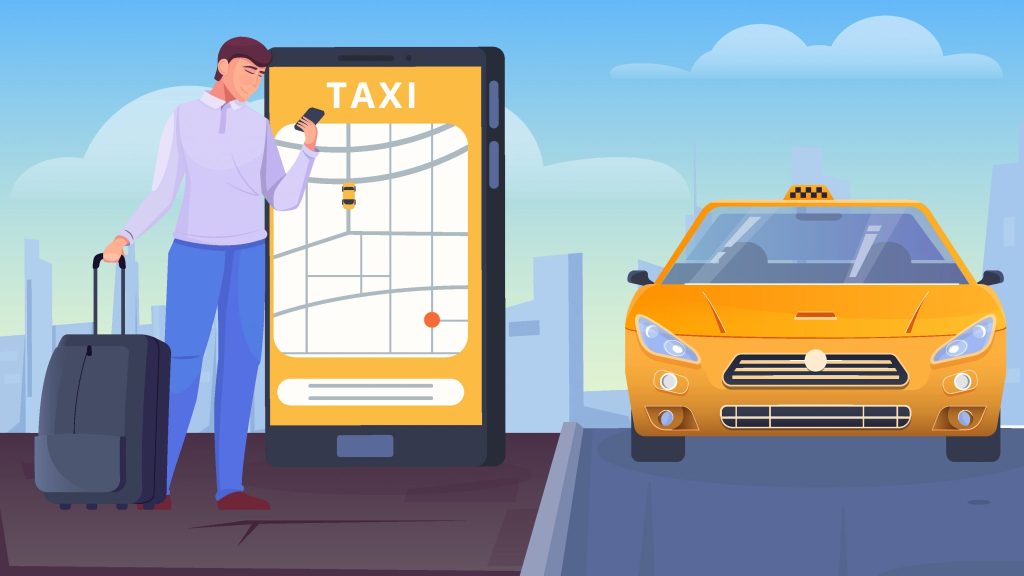
How do these apps work now? It is effortless. One of these apps must be downloaded and installed on the users’ mobile devices. The location in which the app is accessible, feedback and evaluations of the app and services, and the type of services they provide can all influence the app’s choice.
Users of the app may register and record their home and work addresses after downloading it, making it simple to request a cab with just one click. They can also select the car they want to get in using the app.
After the app determines the commute’s length and cost, consumers can contrast the prices of the vehicles. Finally, one can reserve a cab and learn how long it will wait.
Importance of a Taxi Booking App
Taxi booking is among the most extensively used business formats since it enables organizations to develop indefinitely and address specific markets.
Examples of taxi app development ideas include carpooling, renting out luxury vehicles, providing healthcare services, and providing delivery services.
In addition, taxi companies may increase their user base and spread the word regarding their services by utilizing any taxi booking app development concepts.
People are traveling because of urbanization and improved road connectivity. If your taxi booking app has the right features, it might become valuable to customers and give you an advantage over rivals.
A smartphone app is crucial because the taxi sector has become highly specialized due to the advancement of technology.

By creating a cab booking app, you can create tailored promotions for your target audience and cab drivers who are prepared to join your platform.
If you have a taxi booking app, you may make a comprehensive creation, including everything from in-app payment options for consumers to insurance coverage to scheduling flexibility and the chance for drivers to earn extra during peak hours.
Cost of Developing a Taxi Booking App
The functions that need to be added significantly impact any app development cost. The price will increase directly proportional to the amenities’ variety and difficulty level.
We must consider the three components of the solution – an app for passengers, an app for travelers, and a panel for administrators – when estimating the cost of designing a taxi booking app.
Understanding these components and their qualities will aid in your estimation of the price of apps like Uber. So let’s examine each one in turn. For the development of a taxi app, an app development company will typically follow a five-step approach.
These include testing and quality assurance, web development, native development, backend development, UX and UI design, and testing. The price for developing a taxi booking app corresponds directly with the required time.
As you can see from what you have read, several factors affect how much it will cost to design a taxi booking app. First, you must know how it fluctuates based on your desired characteristics and the company’s model.
The cost of building an app is significantly influenced by geographic location.Therefore, the development cost will vary according to the area you select.
- US: 150–250/hour (in dollars).
- Eastern Europe: 40–150/hour (in dollars).
- India: 10–80/hour (in dollars).
An app for booking taxis with the bare minimum of functions will typically cost between $40,000 and $50,000 to design. The price will change when the geographic location and other relevant factors are considered.
Features of a Taxi Booking App
Flawless Registration
Travelers should not be inconvenienced throughout the sign-up process; simplifying it helps them get a favorable image of the app.
They would stop using the app at that point if the enrollment process was too lengthy. Gather information like a username and password, email, mobile number, and first and last name.
Urgent Number
In an unforeseen situation, passengers can add a contact to communicate their ride status. Travelers who drive alone or frequently travel at nighttime will find this characteristic useful.
Vehicle Groups
There must be a variety of vehicle types available to riders. The pricing for every group must be shown under every vehicle to allow passengers to decide which is best for them. Travellers can start their vacation by selecting the most economical option after comparing rates.
Chat in-app
This function makes it possible to interact with other passengers about the taxi’s whereabouts and with its driver when there is a backlog. Drivers also benefit from this feature.
SOS Support
SOS Assistance enables cyclists to give the police and any additional emergency contacts their most recent ride information. This function is helpful and increases the passenger’s comfort while utilizing your mobile application.
In-App Wallet
Thanks to this function, the passenger can pay more quickly and add funds to their wallet whenever they want. In addition, passengers can also use cards to pay off their wallets.
Live Tracking
This feature enhances the passenger’s journey. It allows them to see the precise position of the taxi they have reserved and the current state of their travel.
Additionally, riders can view when they arrive at the drop-off spot, and live congestion will be updated appropriately.
Trip Record
Travelers can obtain a detailed list of their recent and upcoming travels. The trip history shows all the relevant information, including the time, total expense, and fee distribution.
Ratings and Reviews
It must be possible for passengers to rate and review their journey. Feedback and evaluation determine how content the passenger was with the experience.
Additionally, the administrator can handle all of these ratings and reviews from the admin area, giving the admin more knowledge about the drivers.
Wrapping Up
A mobile app development company is ideal for obtaining an updated and improved version of a taxi booking app.
Getting specialists for the project is the perfect course of action because you can depend entirely on them to handle all the work while you sit back and relax. Then, create the most incredible taxi booking app to stand out from the competition and put up a fight.
Why not now? Connect to Mindster.

Ankitha is a professional content writer with more than four years of experience. She writes blogs relevant to the services that we provide and also about the various mobile app solutions that we provide. With strong research skills and critical thinking skills, she can develop high-quality content that is valid and authentic. She also has good communication skills to interact with the team members to build up-to-date content related to the latest technologies.