
A doctor appointment app sometimes called a doctor booking app or an app for doctor appointment scheduling is software that lets patients book, reschedule, or cancel consultations with a doctor, and in most cases also start a video or chat consultation, receive an e-prescription, and get appointment reminders, all from a phone. Below is a comparison of 10 of the best apps for doctor appointments in active use in 2026, followed by what to look for before choosing one for your practice or hospital.
Key Takeaways
- A doctor appointment app combines scheduling, teleconsultation, and e-prescriptions in one place — the strongest apps in 2026 do all three, not just booking.
- Marketplace apps (Practo, Apollo 24|7) win on patient discovery but list a clinic alongside competitors; custom-built apps trade faster discovery for full control over branding, data, and workflow.
- Region matters: US patients lean on insurer-linked apps like MDLIVE and Doctor on Demand, India-focused patients on Practo and Apollo 24|7, and clinics serving non-English-first markets need built-in multilingual support, as SugoiMed does for Japan.
- Before adopting any app, check for real-time scheduling, encrypted data handling, and compliance with the relevant regional standard (HIPAA in the US, equivalent data protection laws elsewhere).
Why Doctor Appointment Apps Matter Now
Patients increasingly choose a healthcare provider based on whether digital booking, teleconsultation, and e-prescriptions are available not just on reputation or location. Healthcare apps for patients have shifted from a convenience to an expectation, and for clinics and hospitals, the same appointment app for doctors that patients use to book appointments also cuts no-show rates, reduces front-desk call volume, and gives doctors structured patient data before a visit even starts.
Benefits for Patients
- Book, reschedule, or cancel a consultation without a phone call
- Compare doctors by specialty, experience, and consultation fee before booking
- Attend consultations by video or chat instead of traveling
- Receive e-prescriptions and appointment reminders automatically
Benefits for Clinics and Hospitals
- Centralized patient records, appointment history, and doctor ratings
- Fewer no-shows through automated reminders
- Lower administrative load on front-desk staff
Benefits for Doctors
- A structured schedule that reduces gaps and overbooking
- Patient history and prior consultation notes available before each visit
- Fewer cancellations going unnoticed, since patients self-manage rescheduling
Build a Doctor Appointment App Under Your Own Brand
Scheduling, video consultations, and e-prescriptions — built around your clinic, not a marketplace listing.
Start Your BuildWhat to Look for in a Doctor Booking App
Before comparing individual doctor consultation apps, these are the features that separate a functional doctor app from one patients actually keep using:
- Real-time scheduling live doctor availability, not a request-and-wait system
- Video and chat consultation built in, not routed to a third-party tool
- E-prescriptions that patients can access and download directly
- Automated reminders by SMS, push notification, or email
- Doctor profiles with verified credentials, specialty, and fees
- Data security — encryption and compliance appropriate to the region (HIPAA in the US, similar data protection standards elsewhere)
- Integration with clinic systems — EHR, billing, and lab reports, for the clinic-facing side of the app
Comparison at a Glance
|
App |
Best For |
Video Consult |
E-Prescription |
Core Focus |
|
Practo |
General doctor search & booking (India) |
Yes |
Yes |
Marketplace + consultation |
|
Apollo 24|7 |
End-to-end care (consult, pharmacy, labs) |
Yes |
Yes |
Integrated healthcare (India) |
|
HealthPlix SPOT |
Clinic digitization for doctors |
Yes |
Yes, multilingual |
Practice management |
|
Sminq |
Queue management & wait-time visibility |
No |
No |
Clinic operations |
|
Lybrate |
Quick doctor Q&A and consultation |
Yes |
Limited |
Doctor-patient messaging |
|
Amwell |
Enterprise telehealth via health systems |
Yes |
Yes |
Health-system telehealth |
|
Talkspace |
Online therapy and mental health |
Yes (chat-first) |
Yes |
Behavioral health |
|
Doctor on Demand (Included Health) |
24/7 urgent & primary care (US) |
Yes |
Yes |
Virtual urgent care |
|
MDLIVE (Evernorth) |
Insurer-backed virtual care (US) |
Yes |
Yes |
Payer-integrated telehealth |
|
Teladoc Health |
Comprehensive virtual care, global reach |
Yes |
Yes |
Full-spectrum telehealth |
|
SugoiMed (built by Mindster) |
Bilingual patient-doctor connect in Japan |
Yes |
Yes |
Custom-built regional platform |
The 10 Apps, In Detail
Each of these doctor consultation apps takes a different approach — some are patient-facing marketplaces, some are built for the doctor’s side of the practice, and some focus on a single piece of the workflow.
1. Practo
Best for: Patients searching for and booking a specific specialist in India. Practo remains one of the most-used doctor discovery and booking platforms, listing doctors by specialty, experience, consultation fee, and patient ratings. It supports video consultations, digital prescriptions, and in-app health queries.
Standout: Transparent doctor profiles make it easy to compare before booking, which is what keeps it a default choice for patients researching specialists.
2. Apollo 24|7
Best for: Patients who want consultation, pharmacy, and lab tests in one app. Backed by Apollo Hospitals, this app combines doctor consultations with medicine delivery and diagnostic test booking, reducing the number of separate apps a patient needs for a single health episode.
Standout: The connected pharmacy and lab network removes the handoff gap between “seeing a doctor” and “getting the prescribed treatment.”
3. HealthPlix SPOT
Best for: Doctors and clinics digitizing their practice. HealthPlix SPOT is built for the doctor’s side of the interaction — setting up an online clinic, accepting advance payments, writing prescriptions in multiple regional languages, and managing patient records with AI-assisted support.
Standout: Multilingual e-prescriptions make it relevant for clinics serving diverse patient bases.
4. Sminq
Best for: Clinics that want to cut in-person waiting time. Sminq focuses on queue and appointment-flow management rather than consultation itself — patients see live wait-time status and get notified as their turn approaches.
Standout: A narrow, operations-focused feature set that solves one specific pain point well: the waiting room.
5. Lybrate
Best for: Fast, informal doctor-patient communication. Lybrate connects patients with doctors for quick queries and consultations, with an emphasis on helping doctors build an online reputation alongside delivering care.
Standout: Low-friction messaging makes it useful for follow-up questions that don’t need a full appointment.
6. Amwell
Best for: Patients accessing telehealth through a hospital or insurer network. Amwell partners with health systems and insurers rather than operating as a standalone consumer marketplace, and reports a significant reduction in patient wait times where deployed. It includes EHR connectivity and supports both scheduled and on-demand visits.
Standout: Deep integration with existing health-system infrastructure, rather than a bolt-on consumer app.
7. Talkspace
Best for: Online therapy and mental health support. Talkspace connects patients with licensed therapists and psychiatrists primarily through asynchronous messaging, with live video sessions available. It’s structured around ongoing mental health care rather than one-off consultations.
Standout: Insurance-compatible plans and a messaging-first format suited to therapy specifically, not general medical consults.
8. Doctor on Demand
Best for: 24/7 urgent care and mental health visits in the US. Doctor on Demand provides round-the-clock access to physicians and psychiatrists via video, with support for prescriptions and lab referrals. Following its merger into Included Health, it now operates as part of a broader virtual-first care platform.
Standout: Genuine 24/7 availability rather than business-hours-only scheduling.
9. MDLIVE (part of Evernorth/Cigna)
Best for: Patients whose insurance plan includes MDLIVE as a benefit. MDLIVE offers 24/7 virtual visits across primary care, urgent care, and behavioral health, and operates within Evernorth (Cigna’s health services division) following a 2021 acquisition.
Standout: Strong payer integration means many users access it at little to no extra cost through their existing insurance.
10. Teladoc Health
Best for: Broad, always-on virtual care across specialties. Teladoc offers scheduled and on-demand video visits across general medicine, chronic care, and specialist consultations, with AI-assisted triage used to route patients faster and reduce wait times.
Standout: Breadth of care categories in a single app, from urgent care to ongoing chronic disease management.
11. SugoiMed
Best for: A clinic or healthcare network that needs a custom, region-specific platform rather than a generic marketplace listing. SugoiMed is a bilingual digital healthcare platform built for Japan, connecting patients, doctors, clinics, and support teams through appointment booking and online consultation. Unlike the marketplace apps above, it was built to a specific market’s language and workflow requirements rather than adapted from a one-size-fits-all product.
Standout: It’s a working example of what “build your own” looks like in practice — multilingual doctor discovery, live scheduling, and teleconsultation running under a dedicated brand instead of a shared marketplace.
Choosing Between “Use an App” and “Build Your Own”
The apps above work well for patients booking with independent doctors or large hospital networks. But for a clinic, hospital chain, or healthcare business that wants its own booking experience — not a listing among competitors on a marketplace — a custom-built solution is the more common route, especially where regional compliance (HIPAA, GDPR, or country-specific health data rules) has to be built in from day one rather than retrofitted. SugoiMed above is one example of what that looks like when the requirement is a specific language and market rather than a generic template.
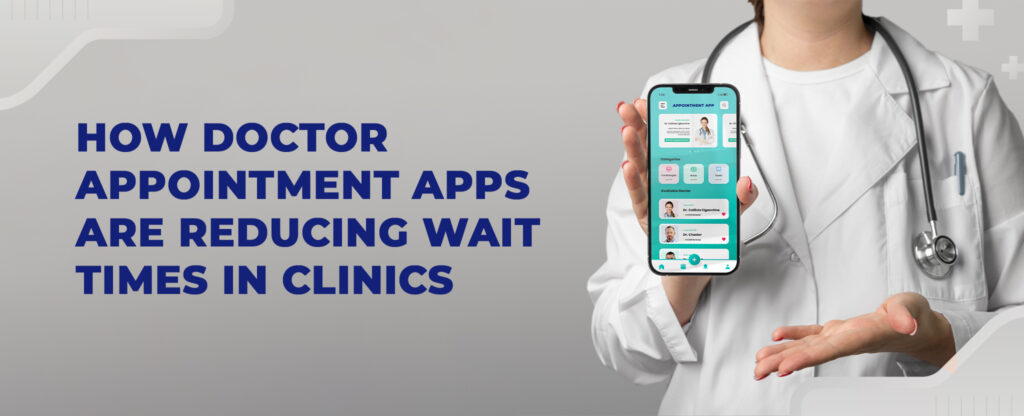
This is the gap Mindster’s doctor appointment app solutions and clinic management software are built to close — real-time scheduling, video consultations, e-prescriptions, and EHR-ready patient records under a clinic’s own brand rather than a third-party marketplace listing. For a closer look at what that build process involves, see how real-time scheduling features reduce no-shows, and how doctor appointment apps are cutting clinic wait times in practice.
Not Sure Which Approach Fits Your Clinic?
Let's figure out what makes sense for your patient volume and region.
Talk to Our TeamFinal Thoughts
The apps above solve different parts of the same problem — patient-side discovery and booking, doctor-side practice management, or clinic-side operations. Which one fits depends on whether you’re a patient looking for the best apps for doctor appointments, or a clinic looking to build an appointment app for doctors of its own.
If it’s the latter, Mindster builds doctor appointment and clinic management platforms with real-time scheduling, teleconsultation, and compliance built in from the ground up — get in touch to talk through what a custom-built version would look like for your practice.

Ankitha is a professional content writer with more than four years of experience. She writes blogs relevant to the services that we provide and also about the various mobile app solutions that we provide. With strong research skills and critical thinking skills, she can develop high-quality content that is valid and authentic. She also has good communication skills to interact with the team members to build up-to-date content related to the latest technologies.