

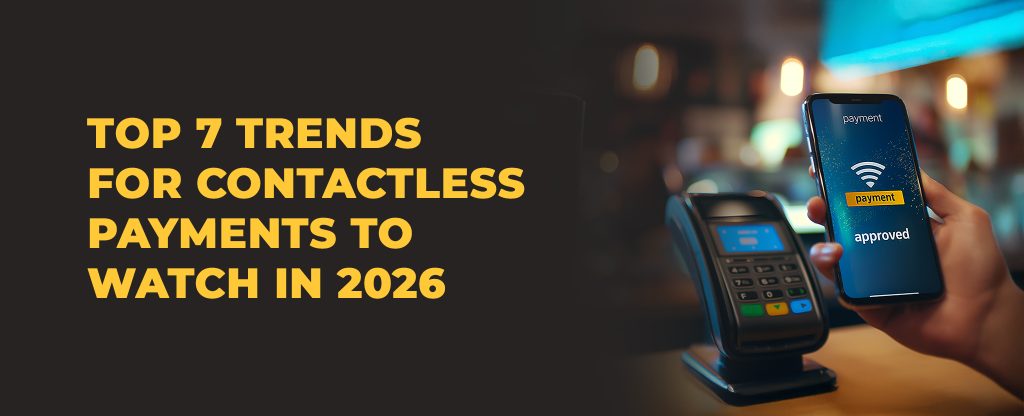
The global financial landscape has reached a historic turning point in 2026. As speed and security become the primary drivers of consumer loyalty, contactless payment technology has transitioned from an optional convenience to a global economic necessity.
What is Contactless Payment?
Contactless payment is a secure transaction method that allows consumers to purchase goods or services by tapping a debit card, credit card, or smart device near a point-of-sale (POS) terminal. This technology utilizes Near Field Communication (NFC) or Radio Frequency Identification (RFID) to transmit encrypted payment data wirelessly over short distances (typically less than 4 centimeters). Unlike traditional swipe or chip-and-pin methods, contactless transactions require no physical contact, completing the authentication process in under two seconds.
The State of Contactless Payments in 2026: By the Numbers
To understand why businesses are pivoting toward a “tap-first” strategy, we must look at the current 2026 data:
- Global Adoption: Over 5.2 billion people (60% of the world’s population) now utilize digital wallets.
- Market Valuation: The contactless payment market is projected to hit $84.2 billion by the end of 2026, growing at a CAGR of 20.8%.
- Transaction Volume: In regions like India and Southeast Asia, contactless and QR-based payments now account for 75% of all retail transactions.
- Security Impact: The shift to biometric-linked contactless systems has reduced card-present fraud by an estimated 34% globally this year.
7 Defining Trends of the 2026 Contactless Ecosystem
1. Biometric Authentication: The New Security Gold Standard
In 2026, the biometric payment market is valued at $13.72 billion. The era of memorizing PINs or carrying physical IDs is fading. Security is now physically tied to the individual through unique biological markers.
- Facial and Palm Recognition: High-traffic retail environments are increasingly deploying “Pay-by-Palm” and “Face-Match” kiosks. These systems use 3D infrared mapping to verify identity with 99.9% accuracy.
- Liveness Detection: To combat the rise of AI-generated deepfakes, 2026 terminals use “liveness sensors” that detect blood flow and thermal heat, ensuring a live human is present during the transaction.
- Tokenization: Every biometric scan is converted into a unique digital token. Your actual biological data is never stored on a merchant’s server, making it a “zero-trust” security model.
2. SoftPOS: Turning Every Smartphone into a Terminal
The barrier to entry for digital commerce has been eliminated by SoftPOS (Software Point of Sale) technology. This allows any NFC-enabled smartphone—Android or iOS—to function as a fully compliant payment terminal without additional hardware.
- Empowering Micro-Merchants: Small businesses and gig workers now represent 52% of SoftPOS adoption. Whether it is a street food vendor or a freelance consultant, anyone can accept “tap-to-pay” instantly.
- Cost Reduction: By removing the need for proprietary hardware readers, businesses can save thousands in upfront infrastructure costs.
- Internal Link: Discover how Mindster’s mobile app development services integrate SoftPOS capabilities for modern retailers.
3. Ultra-Wideband (UWB) & “Hands-Free” Payments
While NFC requires a close-range tap, Ultra-Wideband (UWB) technology is introducing “spatial payments” in 2026.
- Frictionless Entry: UWB allows a consumer to keep their phone in their pocket or bag while walking through a checkout gate. The system identifies the user’s exact location and authorizes the payment automatically.
- Precision and Accuracy: Unlike Bluetooth, UWB offers centimeter-level accuracy, ensuring the system never accidentally charges the wrong person standing in line.
4. Agentic AI Commerce: The Rise of Autonomous Payments
A major shift this year is the emergence of Agentic AI. Consumers no longer just use apps; they use AI Agents that manage their financial lives.
- Automated Transactions: Your AI agent can now monitor your subscription services, negotiate a better renewal rate, and execute the payment autonomously based on pre-set “guardrails.”
- Predictive Shopping: AI-linked wallets analyze spending patterns to suggest the most cost-effective payment method (e.g., using a specific card for rewards) at the moment of purchase.
5. Next-Gen Wearables: The Smart Ring Era
Smartwatches remain popular, but smart rings have become the breakout hardware of 2026, capturing 15% of the wearable transaction market.
- Durability and Design: Favored for their 10-day battery life and subtle form factor, smart rings allow for a more natural “flick of the wrist” payment motion.
- Health-Fintech Convergence: These devices now track heart rate and oxygen levels while simultaneously holding encrypted payment tokens, merging personal wellness with financial utility.
6. Central Bank Digital Currencies (CBDCs) and Stablecoins
The infrastructure of what we pay for is changing. In 2026, CBDCs (Central Bank Digital Currencies) have moved from pilot programs to mainstream retail integration.
- Instant Settlement: Unlike traditional credit card rails that can take days to settle, CBDC transactions settle in real-time, improving cash flow for merchants.
- Stablecoin Utility: For international travelers, contactless wallets now support regulated stablecoins, allowing users to avoid high foreign exchange (FX) fees when tapping abroad.
7. Regenerative Payment Loops: The Circular Economy
The 2026 consumer—led by Gen Z—prioritizes sustainability. Contactless systems have adapted by integrating with the circular economy.
- Smart Bin Integration: When a customer returns reusable packaging to a smart bin, the “micro-deposit” is instantly credited back to their contactless wallet via NFC.
- Carbon Tracking: Many 2026 digital wallets now provide a real-time “Carbon Footprint” score for every tap, encouraging eco-friendly purchasing behavior.
The Benefits of Transitioning to Contactless Systems
For businesses, the move toward these 2026 trends offers three core advantages:
- Operational Speed: Contactless transactions are roughly 63% faster than cash or traditional card swipes, significantly reducing queue times during peak hours.
- Higher Conversion: Frictionless payment methods (like UWB and SoftPOS) reduce “cart abandonment” in physical retail environments.
- Data Insights: Digital-first payments provide merchants with high-quality, anonymized data to better understand customer preferences and inventory needs.
- External Link: For more on how digital transformation impacts retail, see the latest Global Payments Report.
Final Thoughts
The 2026 payment landscape is defined by invisibility, security, and intelligence. The transition to a “cashless society” is no longer a prediction—it is a reality managed by 5.2 billion users.
For businesses to thrive, they must move beyond simple card readers. Adopting SoftPOS, exploring Biometric security, and preparing for AI-driven commerce are essential steps to meeting modern customer expectations. At Mindster, we specialize in building the fintech infrastructure that powers these experiences.
Ready to upgrade? Check out our Mindster Blogs for more industry insights or contact our team to discuss your next fintech project.
Frequently Asked Questions
What is the most secure contactless payment method in 2026?
Biometric authentication combined with tokenization is the gold standard. Since a unique digital token is used for each transaction instead of your actual card number or biological data, it is virtually impossible for hackers to steal or reuse your information.
How many people use digital wallets globally?
As of March 2026, over 5.2 billion people use digital wallets. This represents a 60% global adoption rate, with the highest concentrations in the Asia-Pacific and Latin American regions.
Can I accept contactless payments without a card machine?
Yes. Using SoftPOS (Software Point of Sale) technology, you can turn any NFC-enabled smartphone into a payment terminal simply by installing a compliant app. This is ideal for small businesses and mobile service providers.
How does Ultra-Wideband (UWB) differ from NFC?
NFC requires you to be within 4cm of a terminal (a physical “tap”). UWB allows for “Hands-Free” payments, identifying your device from several meters away and authorizing the payment as you pass a sensor.
What are the limits for contactless payments?
In 2026, most regions have increased contactless limits to accommodate larger purchases. However, for high-value transactions, systems typically require an additional layer of security, such as a fingerprint scan or facial recognition.
Are smart rings safe for payments?
Absolutely. Smart rings use the same NFC and HCE (Host Card Emulation) technology found in smartphones and premium credit cards. They are encrypted and can be instantly deactivated via a smartphone app if lost.

Ankitha is a professional content writer with more than four years of experience. She writes blogs relevant to the services that we provide and also about the various mobile app solutions that we provide. With strong research skills and critical thinking skills, she can develop high-quality content that is valid and authentic. She also has good communication skills to interact with the team members to build up-to-date content related to the latest technologies.

