
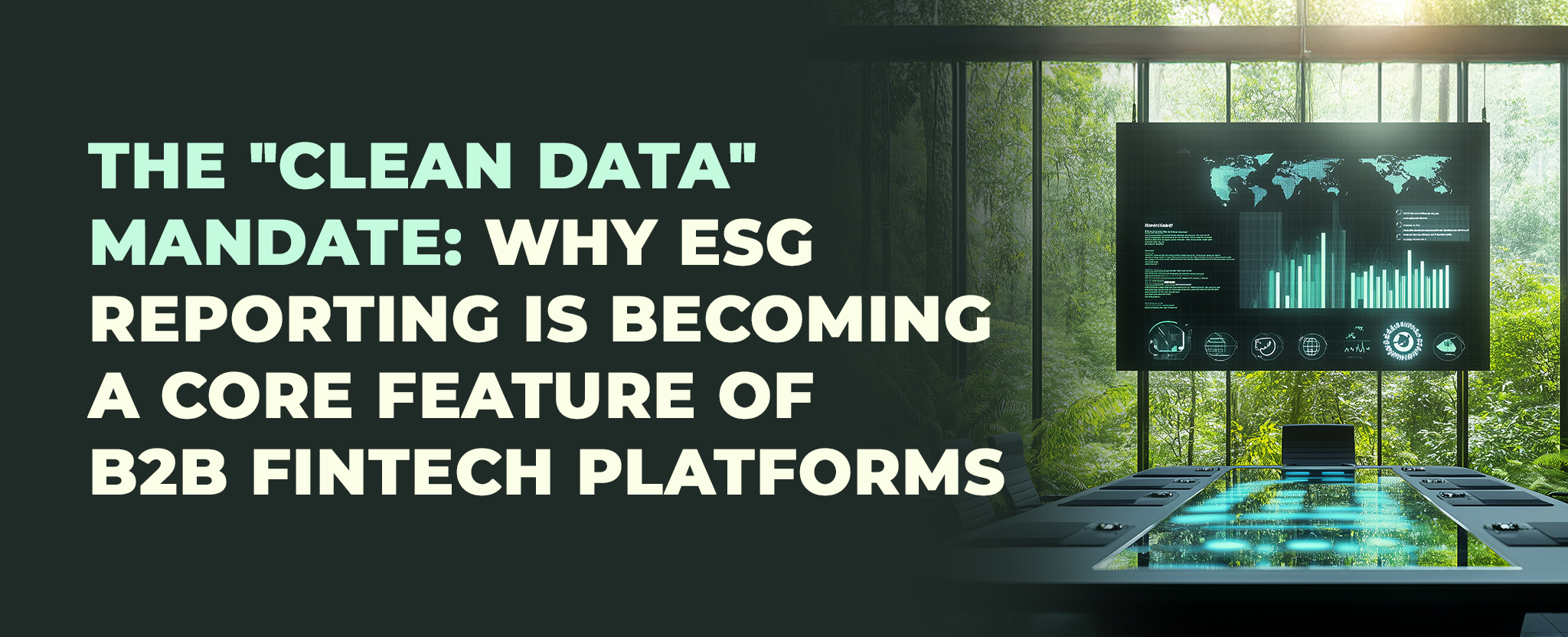
By 2026, corporate sustainability is no longer branding—it is a data engineering challenge. For B2B fintech, this shift brings a “Clean Data” mandate: sustainability metrics must match financial balance sheets in verification and detail.
With frameworks such as the UAE’s Climate Law and international ISSB standards now enforced, the industry is moving away from qualitative narratives. The new standard is “investor-grade” data: accurate, real-time, and audit-ready (UAE Climate Change Law (Federal Decree-Law No. 11 of 2024).
The Strategic Imperative: Why ESG Reporting is Vital for Fintech Leaders
ESG (Environmental, Social, and Governance) reporting is the disclosure of a company’s impact on sustainability, ethics, and social issues. For B2B fintechs, this is no longer just an “ethical choice.” It is a vital requirement for building investor trust, securing enterprise partnerships, and meeting strict supply chain sustainability standards. By integrating these three pillars into a “single source of truth,” fintech leaders can shift from manual tracking to autonomous compliance, reducing risk and increasing valuation. 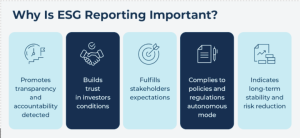
Figure 2: Why Is ESG Reporting Important?
- Environmental (E): Operational Efficiency. Beyond just “being green,” this involves tracking carbon footprints ($Scope\ 1, 2, and\ 3$) and optimizing data center energy use. For B2B partners, fintech’s energy efficiency directly impacts the partner’s own sustainability goals.
- Social (S): Trust and Inclusion. This measures how a company interacts with people. In fintech, it is proven through financial inclusion, robust data privacy, and automated labor compliance (such as the UAE WPS), ensuring the company meets the high ethical expectations of modern stakeholders.
- Governance (G): Accountability and Transparency. This focuses on internal controls and regulatory adherence. By automating AML/KYC reporting and ensuring financial algorithms are unbiased, and “open,” fintechs demonstrate the long-term stability and integrity that institutional investors demand.
- Ultimately, ESG reporting acts as an early-warning system for risk. Fintechs that prioritize this data don’t just comply with policies—they build more resilient, transparent, and higher-valued businesses in a competitive 2026 market.
The Liability of “Dirty Data”
In the past, ESG reporting relied on “dirty data” such as manual spreadsheets, self-reported surveys, and estimates made later. In the strict rules’ environment of 2026, this approach is very risky.
Regulators now treat unsupported sustainability claims as seriously as financial fraud. “Greenwashing by Incompetence,” where a company cannot back up its claims because of scattered data, is a major legal risk. As a result, companies are moving from standalone ESG software to fintech providers who can connect real transactions with standardized reporting.
Fintech as the “Transactional Truth”
B2B fintech platforms sit at the most important point in the data flow: where money changes hands. Every dollar a company spends tells an ESG story. By adding ESG data management directly into payment systems, fintechs turn simple transactions into verifiable data.
This architecture facilitates:
- Automated Attribution: Matching spending to carbon or social impact categories instantly at the time of purchase.
- Financial Data Standardization: Combining different data—like invoices, bank records, and payroll—into one clear format that outside auditors can check without extra work.
The Architecture of Integrity: Three Pillars of ESG Data Governance
Following the “Clean Data” rule needs a backend system designed for openness. This includes three technical steps for managing ESG data:
- Standardized Data Pipelines and Middleware Logic
Financial data often arrives unorganized from bank feeds and old systems. Skilled fintech engineers work on the middle layer, creating systems that pull out, clean, and organize this data instantly. By standardizing financial data carefully, platforms ensure every entry follows global rules (GRI or SASB) from the beginning.
- API Enrichment and the Scope 3 Challenge
The hardest environmental reporting part is Scope 3 emissions. Modern ESG platforms handle this by using APIs that work together. These APIs link the fintech system to global environmental databases, giving instant access to carbon emission data. For example, a payment for industrial materials is automatically updated with the material’s carbon footprint based on where it came from, turning an invoice into a detailed environmental report without any manual work.
- Immutable Audit Trails and the “Trust Layer.”
The “Governance” (G) in ESG requires data to be tamper-proof, meaning that data cannot be altered once recorded. In fintech, data governance involves creating secure, chronologically ordered data structures where every entry is immutable, or unable to be changed. Engineering a platform that allows an auditor to drill down from a high-level ESG (Environmental, Social, and Governance) score to the individual financial transactions that generated it is the 2026 industry standard.
Insights From Our Project ONEIC Pay: Lessons Learnt and Applied 
Figure 2: Oneic pay
At Mindster, we know exactly what “Clean Data” means in the real world. When we built the ONEIC Pay app, our job wasn’t just to make something that looked nice. We had to use old, complicated computer systems and make them work smoothly and safely on modern mobile phones.
Today, ONEIC Pay handles more than 20,000 payments every day for over a million users. We are really proud of this, because it proves that an app can be huge but still keep every single detail perfectly accurate. For us, making a positive impact on society isn’t just a catchy phrase—it’s built right into our solutions. Every time someone pays a bill or sends money to a friend safely on our app, the system automatically creates a clear record showing that safe financial services are reaching more people.
Looking at all the finance projects we’ve done at Mindster—processing over 125 million payments worth $20 billion—we’ve learned one big lesson: a good system checks its own work. When you build strong software from the very beginning, it naturally creates the clear, “Clean Data” that global rules require.
Explore How to Build Fintech Apps That Scale: Case Study of 3M+ Users and $20B+ Transactions
Moat: Why ESG is a Business Multiplier
For B2B fintech providers, the “Clean Data” rule is a major competitive edge.
- Reduced Churn: Platforms that build ESG reporting into their core systems become essential to clients’ compliance processes.
- Enterprise Adoption: Large companies now choose vendors based on their ability to offer clear data. Fintech providers without ESG reporting are more often left out of bidding processes.
- Capital Access: Venture capital and private equity firms focus on “Article 8” or “Article 9” funds under the Sustainable Finance Disclosure Regulation (SFDR), which need sustainable investment reports. Fintech providers that support this data are better placed for higher-value sales.
Final Thoughts
Finance and Sustainability have combined into one complete measure: “corporate health.” The “Clean Data” rule is the engineering community’s answer to a worldwide call for openness. Sustainability claims are only trustworthy if the data behind them is solid. By focusing on transparency and real-time updates, the fintech industry is building the technical base for the green economy.
Frequently Asked Questions and Answers
How does “Clean Data” differ from traditional ESG reporting?
Traditional reporting relies on retrospective, manual estimates. The “Clean Data” mandate requires real-time, transaction-level accuracy derived from data governance in fintech systems, ensuring every claim is backed by a financial audit trail.
Can B2B fintech platforms mitigate “Greenwashing” risks?
Yes. By utilizing financial data standardization and immutable ledgers, fintechs provide technical “proof of work” that satisfies regulators and investors, moving beyond marketing claims.
What is the role of APIs in ESG reporting?
APIs enrich raw financial data with external environmental indices (like carbon emission factors). This makes ESG data management an automated byproduct of the payment process rather than a manual task.
Sources:
UAE Climate Law and ISSB Standards
- UAE Climate Law: Federal Decree-Law No. 11 of 2024 – MOCCAE Portal
- ISSB Standards: IFRS S1 & S2 General Requirements – Official Project Page
Investor-Grade Data & Compliance
Regulatory Consequences & Greenwashing
- European Union (SFDR): Official Text of Regulation (EU) 2019/2088
- Financial Times: Greenwashing Crackdown and ESG Data (Article)
Scope 3 Emissions & Scoring
- GHG Protocol: Corporate Value Chain (Scope 3) Standard
Data Standardization Frameworks

Akhila drives the content strategy at Mindster, combining analytical clarity with a passion for digital product innovation. With a deep focus on mobile app strategy and software solutions, she bridges the gap between engineering complexity and intuitive user experiences. She thoughtfully articulates tech concepts, transforming frameworks, case studies, and digital transformation trends into actionable insights for product teams and business leaders.