



The global AI market is projected to reach astronomical heights, with enterprises across industries racing to integrate intelligent solutions into their operations.
What makes 2026 particularly exciting is the convergence of multiple AI technologies, from generative AI and natural language processing to computer vision and predictive analytics. These technologies are no longer operating in silos but working together to create sophisticated applications that can transform entire business models. Whether you’re a startup founder searching for your next big idea, an entrepreneur looking to innovate, or an enterprise seeking digital transformation, understanding the most promising AI app concepts is crucial for success.
In this comprehensive guide, we explore 21 cutting-edge AI app ideas that are poised to shape the future of technology in 2026 and beyond.. Each idea has been carefully selected based on its potential for disruption, scalability, and real-world impact. From healthcare and education to finance and entertainment, these AI-powered solutions address pressing challenges while opening new revenue streams.
Why Invest in AI App Development in 2026?
The AI market is growing fast. It was worth USD 371.71 billion in 2025 and will reach USD 2,407.02 billion by 2032. That’s 30.6% growth every year.
AI in mobile apps is growing even faster. The market will go from USD 21.23 billion in 2024 to USD 354.09 billion by 2034—a 32.5% annual growth rate.
Users expect smart apps now. They want personalized experiences and apps that learn from them. Traditional apps can’t do this. Only AI apps can.
Businesses that invest in AI apps reduce costs, improve customer satisfaction, and gain better insights from data. They also get ahead of competitors who wait too long.
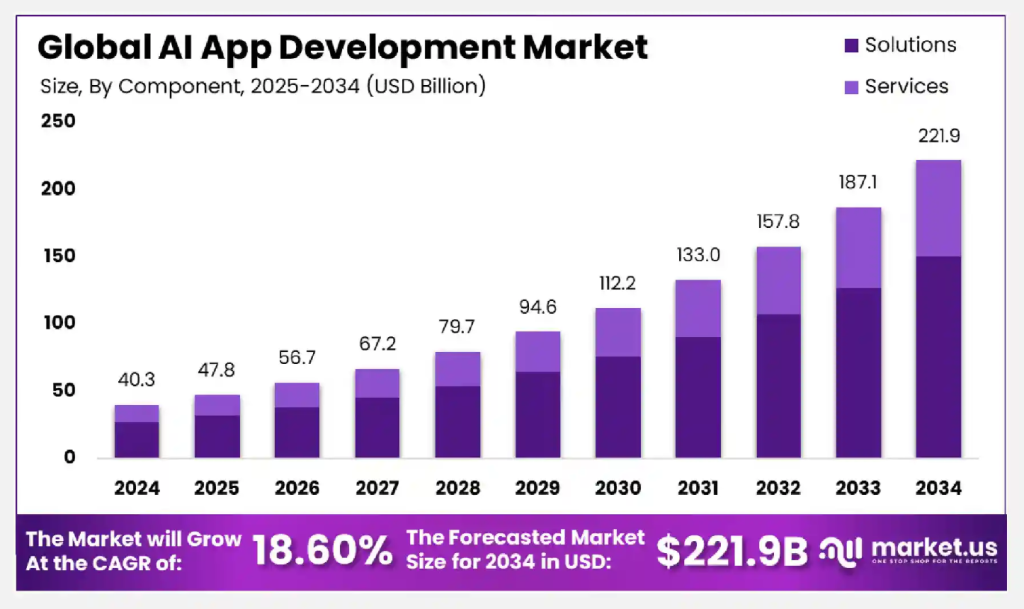
Now, let’s explore the 21 most promising AI app ideas for 2026.
21 Top AI App Ideas in 2026
1. AI-Powered Mental Health Companion
Mental health awareness has reached unprecedented levels, yet access to quality mental health services remains limited. An AI-powered mental health companion app can bridge this gap by providing 24/7 emotional support, cognitive behavioral therapy exercises, and personalized coping strategies.
Key Features:
- Real-time mood tracking and analysis
- AI-driven conversation therapy using natural language processing
- Personalized meditation and mindfulness exercises
- Crisis detection and emergency resource connection
- Progress tracking with detailed mental health insights
- Integration with wearables for stress monitoring
The digital mental health market is experiencing explosive growth, with millions of users seeking accessible mental wellness solutions. This app addresses the critical shortage of mental health professionals while providing affordable support.
2. Intelligent Financial Advisory Platform
Managing personal finances can be overwhelming, especially with complex investment options and constantly changing market conditions. An AI-powered financial advisory platform democratizes wealth management by providing personalized financial guidance previously available only to high-net-worth individuals.
Key Features:
- Real-time portfolio optimization using machine learning
- Predictive market analysis and trend forecasting
- Automated tax optimization strategies
- Risk assessment and rebalancing recommendations
- Natural language queries for financial questions
- Integration with multiple bank accounts and investment platforms
With increasing financial literacy and DIY investing trends, this app can capture a massive market of millennials and Gen Z users looking for intelligent financial guidance without hefty advisor fees.
3. AI-Based Legal Document Analyzer
Legal services are notoriously expensive and time-consuming. An AI legal document analyzer can help individuals and small businesses understand, review, and create legal documents without the need for constant attorney consultation.
Key Features:
- Document upload and instant AI analysis
- Plain-language explanations of complex legal terms
- Risk identification in contracts and agreements
- AI-powered document generation from templates
- Clause comparison across multiple documents
- Red flag detection and compliance checking
Small businesses, startups, and individuals conducting routine legal transactions represent a vast untapped market for affordable legal tech solutions.
4. Smart Home Energy Optimization System
Energy costs continue rising while climate concerns intensify. A smart home energy optimization system uses AI to analyze consumption patterns and automatically adjust settings for maximum efficiency and minimum waste.
Key Features:
- Real-time energy consumption monitoring
- Predictive analytics for energy usage patterns
- Automated device scheduling based on peak/off-peak rates
- Integration with smart home devices and IoT sensors
- Solar panel optimization and battery management
- Personalized energy-saving recommendations
With smart home adoption accelerating and sustainability becoming a priority, this app addresses both economic and environmental concerns for homeowners.
5. AI-Powered Language Learning Platform
Traditional language learning methods often fail to adapt to individual learning styles and paces. An AI-powered language learning platform creates personalized curriculum paths and provides interactive, context-aware learning experiences.
Key Features:
- Adaptive learning algorithms that adjust to user progress
- AI conversation partners with natural dialogue
- Real-time pronunciation feedback and correction
- Cultural context integration and situational learning
- Gamified challenges with intelligent difficulty scaling
- Speech recognition and accent analysis
The global language learning market continues expanding as globalization increases the need for multilingual communication skills across professional and personal contexts.
6. Personalized Nutrition and Meal Planning App
Nutrition is highly individual, yet most dietary advice follows one-size-fits-all approaches. A personalized nutrition app uses AI to analyze individual health data, preferences, and goals to create customized meal plans and nutritional guidance.
Key Features:
- AI-powered meal planning based on dietary restrictions and goals
- Nutritional analysis of food through image recognition
- Grocery list generation and budget optimization
- Recipe suggestions based on available ingredients
- Integration with fitness trackers and health apps
- Predictive analysis for nutritional deficiencies
Health-conscious consumers seeking personalized dietary guidance represent a growing market willing to invest in solutions that deliver tangible health improvements.
7. AI-Driven Job Matching Platform
Job searching and hiring remain inefficient processes plagued by mismatches between candidates and positions. An AI-driven job matching platform goes beyond keyword matching to understand skills, culture fit, and career trajectories.
Key Features:
- Deep learning algorithms for candidate-job compatibility
- Skills gap analysis and learning recommendations
- Automated resume optimization for specific roles
- Interview preparation with AI mock interviews
- Salary negotiation insights based on market data
- Career path prediction and planning
Both job seekers frustrated with traditional platforms and companies struggling to find the right talent create a dual-sided market opportunity.
8. Intelligent Vehicle Maintenance Assistant
Car maintenance is often neglected until problems become serious and expensive. An intelligent vehicle maintenance assistant predicts issues before they occur and provides guidance for optimal vehicle care.
Key Features:
- Predictive maintenance alerts using AI analysis
- Diagnostic code interpretation and solutions
- Service cost comparison and mechanic recommendations
- Vehicle health monitoring through OBD-II integration
- Maintenance history tracking and reminders
- AI chatbot for troubleshooting common issues
With millions of vehicle owners globally, this app addresses a universal need for reducing maintenance costs and extending vehicle lifespan.
9. AI-Powered Content Creation Studio
Content creation demands are exploding, but producing high-quality content consistently remains challenging. An AI content creation studio assists creators with ideation, writing, editing, and optimization across multiple formats.
Key Features:
- AI-generated content drafts for blogs, social media, and videos
- SEO optimization with keyword and trend analysis
- Content calendar management with predictive planning
- Tone and style adaptation for different audiences
- Plagiarism detection and originality scoring
- Multi-language content generation and translation
Content creators, marketers, and businesses constantly seeking to improve their content output represent a massive and growing market.
10. Smart Child Development and Parenting Coach
Parenting is challenging, and every child develops differently. A smart parenting coach uses AI to provide personalized guidance based on child development stages, behavioral patterns, and individual needs.
Key Features:
- Developmental milestone tracking and analysis
- Personalized activity and learning recommendations
- Behavioral pattern analysis and parenting strategies
- Age-appropriate educational content curation
- Sleep pattern optimization with AI insights
- Community connection with parents of similar-aged children
Modern parents actively seeking data-driven insights to support their children’s development create a dedicated and engaged user base.
11. AI-Based Real Estate Investment Analyzer
Real estate investment requires analyzing countless variables and market trends. An AI real estate investment analyzer democratizes sophisticated investment analysis previously available only to institutional investors.
Key Features:
- Property valuation using machine learning models
- Market trend prediction and neighborhood analysis
- ROI calculation with multiple scenario modeling
- Risk assessment and investment recommendations
- Rental price optimization and vacancy prediction
- Automated property search matching investment criteria
Growing interest in real estate investment among retail investors creates demand for accessible analytical tools that level the playing field.
12. Intelligent Personal Shopping Assistant
Online shopping can be overwhelming with countless options and conflicting reviews. An intelligent personal shopping assistant uses AI to understand preferences and find the best products at optimal prices.
Key Features:
- Personalized product recommendations based on preferences
- Price tracking and optimal purchase timing alerts
- Review analysis and authenticity verification
- Virtual try-on using AR and AI
- Sustainable and ethical product filtering
- Budget management and spending insights
E-commerce continues growing exponentially, and consumers increasingly value personalized shopping experiences that save time and money.
13. AI-Powered Sleep Optimization App
Sleep quality dramatically impacts overall health, yet many struggle with sleep disorders or suboptimal rest. An AI sleep optimization app analyzes sleep patterns and environmental factors to improve sleep quality.
Key Features:
- Sleep stage tracking and quality analysis
- Personalized sleep hygiene recommendations
- Smart alarm timing based on sleep cycles
- Environmental optimization suggestions (temperature, light, sound)
- Snoring detection and sleep apnea risk assessment
- Integration with smart home devices for sleep environment control
The sleep tech market is booming as awareness of sleep’s importance grows and people seek solutions for better rest and recovery.
14. AI-Driven Customer Service Platform
Customer service remains a critical business function yet suffers from high costs and inconsistent quality. An AI customer service platform delivers exceptional support while dramatically reducing operational expenses.
Key Features:
- Natural language understanding for complex queries
- Multi-channel support (chat, email, voice, social media)
- Sentiment analysis for emotional intelligence
- Automated ticket routing and prioritization
- Predictive support with proactive issue resolution
- Seamless handoff to human agents when needed
Every business with customers needs effective support solutions, creating an enormous B2B market opportunity across all industries.
15. Intelligent Pet Care and Health Monitor
Pet owners increasingly view their animals as family members and seek the best care possible. An intelligent pet care app provides comprehensive health monitoring and personalized care guidance.
Key Features:
- Health symptom tracking and veterinary consultation
- Behavioral analysis and training recommendations
- Nutrition planning based on breed, age, and health status
- Activity tracking and exercise recommendations
- Medication reminders and vaccination scheduling
- Integration with smart pet devices and wearables
Pet owners demonstrate willingness to invest significantly in their pets’ wellbeing, creating a lucrative market for premium pet care solutions.
16. AI-Based Fraud Detection for Personal Finance
Financial fraud continues evolving, targeting individuals through increasingly sophisticated methods. A personal finance fraud detection app protects users with AI-powered monitoring and alerts.
Key Features:
- Real-time transaction monitoring and anomaly detection
- Identity theft protection and credit monitoring
- Phishing and scam detection for emails and messages
- Dark web monitoring for compromised credentials
- Insurance claim fraud prevention
- Automated dispute filing and resolution assistance
Rising financial fraud concerns create strong demand for consumer-focused security solutions that provide peace of mind.
17. Smart Garden and Plant Care Assistant
Indoor and outdoor gardening surged in popularity, but many struggle to keep plants healthy. A smart garden assistant uses AI and computer vision to provide personalized plant care guidance.
Key Features:
- Plant identification through image recognition
- Personalized care schedules for each plant type
- Disease and pest detection with treatment recommendations
- Watering and fertilization reminders based on conditions
- Growth tracking and health monitoring
- Community features for sharing tips and questions
The gardening and houseplant trend shows no signs of slowing, with millions of enthusiasts seeking better plant care solutions.
18. AI-Powered Interview Preparation Coach
Job interviews remain stressful and high-stakes, with candidates often unprepared for common questions and scenarios. An AI interview coach provides comprehensive preparation through realistic simulations.
Key Features:
- Industry and role-specific mock interviews
- Real-time feedback on answers and body language
- Question prediction based on job description analysis
- Communication skills assessment and improvement tips
- Salary negotiation simulation and strategy
- Anxiety management and confidence building exercises
Job seekers at all career levels seek competitive advantages, making interview preparation a valuable service with strong willingness to pay.
19. Intelligent Wardrobe and Style Manager
Fashion choices can be overwhelming, and many struggle to maximize their existing wardrobe. An intelligent wardrobe manager uses AI to provide personalized styling advice and outfit recommendations.
Key Features:
- Digital wardrobe cataloging through image recognition
- AI stylist with outfit recommendations for occasions
- Seasonal capsule wardrobe planning
- Shopping recommendations to fill wardrobe gaps
- Sustainability tracking and clothing lifecycle management
- Virtual try-on and style matching
Fashion-conscious consumers seeking to optimize their wardrobe investments while staying stylish create a dedicated market segment.
20. AI-Driven Remote Work Productivity Suite
Remote work has become permanent for many, bringing unique productivity challenges. An AI productivity suite optimizes remote work performance through intelligent tools and insights.
Key Features:
- Focus time optimization based on energy levels and tasks
- Meeting analysis and scheduling recommendations
- Distraction detection and management
- Work-life balance monitoring and suggestions
- Collaboration pattern analysis and team insights
- Automated time tracking and productivity reporting
Market Potential: The permanent shift to remote and hybrid work creates ongoing demand for tools that enhance productivity and wellbeing.
21. Smart Medical Symptom Checker and Triage
Healthcare access remains challenging, with many unsure when symptoms require professional attention. An AI medical symptom checker provides preliminary assessments and appropriate care recommendations.
Key Features:
- Symptom analysis through conversational AI
- Urgency assessment and care pathway recommendations
- Integration with telemedicine platforms
- Medication interaction checking
- Health record tracking and management
- Nearby healthcare facility finder with wait times
Market Potential: Healthcare costs and access issues drive demand for preliminary diagnostic tools that improve care decisions while reducing unnecessary visits.
Key Considerations for Building AI Apps in 2026

Technology Stack Selection
Choosing the right AI frameworks, cloud platforms, and development tools is crucial for success. Consider scalability, cost, and available expertise when making technology decisions.
Data Privacy and Security
AI apps handle sensitive user data, making robust security and privacy measures non-negotiable. Compliance with regulations like GDPR, CCPA, and emerging AI-specific legislation is essential.
User Experience Design
AI capabilities mean nothing if users find the app confusing or difficult to use. Intuitive interfaces that make AI features accessible to non-technical users are critical.
Continuous Learning and Improvement
AI models must continuously learn and improve through user interactions and feedback. Building infrastructure for model updates and performance monitoring is essential.
Ethical AI Implementation
Addressing bias, ensuring fairness, and maintaining transparency in AI decision-making builds user trust and avoids potential controversies.
Cost Considerations for AI App Development
Building AI applications requires significant investment, with costs varying based on complexity, features, and scale. A simple AI app with basic features might start around $25,000-$50,000, while complex solutions with advanced AI capabilities, multiple integrations, and large-scale infrastructure can exceed $200,000-$500,000.
Key cost factors include:
- AI model development and training
- Data collection and preparation
- Cloud infrastructure and computing power
- Development team expertise (AI/ML engineers, data scientists)
- Ongoing maintenance and model updates
- Compliance and security implementation
Explore AI in Mobile Apps: Use Cases, Benefits, And Cost For 2026
Final thoughts
The AI application landscape in 2026 offers unprecedented opportunities for innovation and disruption across virtually every industry. The 21 app ideas presented here represent just the beginning of what’s possible when artificial intelligence meets real-world problems and human needs.
Success in the AI app market requires more than just a good idea, it demands a deep understanding of the technology, clear focus on user problems, and commitment to ethical AI development. The apps that will thrive are those that seamlessly integrate AI capabilities into intuitive user experiences while delivering measurable value.
Whether you’re a startup founder, enterprise decision-maker, or technology enthusiast, now is the time to explore how AI can transform your ideas into impactful applications. The infrastructure is in place, the talent is available, and the market is ready. The question is: which of these opportunities will you pursue?
The future of AI applications is not just about technological sophistication—it’s about creating solutions that genuinely improve people’s lives, solve real problems, and open new possibilities. As we move through 2026 and beyond, the most successful AI apps will be those that balance innovation with practicality, power with usability, and ambition with ethics.
Frequently Asked Questions (FAQs)
Q1: How much does it cost to develop an AI app in 2026?
AI app development costs typically range from $25,000 for basic applications to $500,000+ for enterprise-grade solutions with advanced features. Factors include complexity, team expertise, infrastructure requirements, and ongoing maintenance needs.
Q2: What technologies are essential for AI app development?
Essential technologies include machine learning frameworks (TensorFlow, PyTorch), cloud platforms (AWS, Google Cloud, Azure), natural language processing libraries, computer vision tools, and various APIs for AI services.
Q3: How long does it take to develop an AI application?
Development timelines vary significantly based on complexity. Simple AI apps might take 3-6 months, while sophisticated applications with custom AI models can require 12-18 months or more.
Q4: What are the main challenges in AI app development?
Key challenges include data quality and availability, model accuracy and bias, computational costs, user privacy concerns, regulatory compliance, and ensuring intuitive user experiences.
Q5: Can small businesses afford AI app development?
Yes, AI development has become more accessible through cloud-based AI services, pre-trained models, and no-code/low-code platforms. Small businesses can start with MVP approaches and scale gradually.
Q6: What skills are needed to build AI applications?
Critical skills include machine learning expertise, data science, programming (Python, JavaScript), cloud computing knowledge, UI/UX design, and understanding of the specific domain the app targets.
Q7: How do AI apps ensure user data privacy?
Through encryption, secure data storage, anonymization techniques, compliance with privacy regulations, transparent data policies, and giving users control over their data.
Q8: What’s the difference between AI and machine learning in app development?
AI is the broader concept of machines performing tasks that typically require human intelligence, while machine learning is a subset of AI focused on systems that learn and improve from experience without explicit programming.
Q9: Are AI apps better than traditional apps?
AI apps excel at personalization, prediction, automation, and handling complex patterns, but aren’t always necessary. The best approach depends on specific use cases and user needs.
Q10: What’s the future outlook for AI applications?
Extremely positive, with AI becoming increasingly sophisticated, accessible, and integrated into daily life. Expect continued growth in adoption, capability, and market opportunities through 2026 and beyond.

Professional content writer Akhila Mathai has over four years of experience. She writes posts about the different mobile app solutions we offer as well as services related to them. Her ability to conduct thorough research and think critically enables her to produce excellent, authentic, and legitimate content. Along with her strong communication abilities, she collaborates well with her teammates to create information that is current and relevant to emerging technology.

