

Fintech software engineering requires navigating real-time transactions, non-negotiable regulations, and the immediate costs of security failure. While AI adoption in financial firms has grown to 75%, implementation often lacks the safeguards necessary for high-compliance systems.
This guide explains how to divide labor between AI tools and engineering teams across four critical fintech domains to ensure products remain secure and auditable.
Why Fintech Security Requires a Specialized AI Strategy
In most industries, a bug in production is an inconvenience. In fintech, it is a liability. A misrouted payment, a missed fraud flag, a biased credit decision, or a compliance gap can result in customer harm, regulatory enforcement, and direct financial loss. This changes how AI should be used—not whether to use it, but where.
| $12.5 billion lost to fraud in the US in 2025
A 25% increase from the prior year — driven not by more fraud attempts, but by a higher proportion of people actually losing money when targeted. Source: EY 2025 Technology Risk Pulse Survey |
| 90% of financial institutions now use AI for fraud detection
Nine in ten banks have deployed AI-powered fraud detection systems, with two-thirds adopting these systems within the last two years alone. Source: Feedzai AI Fraud Trends Report, 2025 |
| 85% of compliance teams report increasing complexity
85% of respondents in PwC’s 2025 Global Compliance Survey say requirements have become more complex in the last three years. Source: PwC Global Compliance Survey, 2025 |
The scale of AI adoption in fintech is not in question. What matters is the governance around it. AI can process transaction data at a speed and scale no human team can match. But it cannot design the secure infrastructure that transaction data flows through. It cannot ensure that a credit model is free of demographic bias. And it cannot make the judgment call that determines whether a compliance system will survive an audit.
That is where developers remain essential , not as a complement to AI, but as the layer that makes AI safe to deploy in a regulated environment.
The Hybrid Model: Dividing Responsibilities Between AI and Developers
The hybrid model is a clear division of responsibility based on specific strengths:
| AI handles | Developers handle |
| Pattern recognition across large transaction datasets | Secure infrastructure design and data architecture |
| Real-time anomaly detection and alert generation | Compliance logic — RBI, PCI-DSS, SEBI, DORA |
| Credit scoring model training on historical data | Audit trail design and explainability frameworks |
| Generating boilerplate code and test skeletons | Edge case logic in payment flows and lending decisions |
| Regulatory document scanning for compliance gaps | System integration across payment networks and core banking |
| Post-launch transaction monitoring and pattern analysis | Security review of all AI-generated output before production |
In each of the four areas below, this division plays out differently. The use cases reflect implementation patterns from Mindster’s fintech delivery work.
1.Optimizing Payments and Transaction Processing Architecture
The challenge
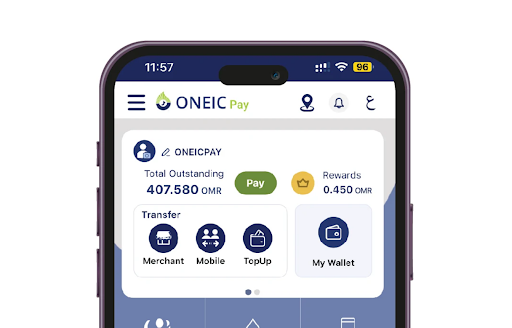
Payment systems have to be fast, available, and correct all at the same time. A payment that takes too long frustrates users. A payment that routes incorrectly creates reconciliation failures. A payment system that goes down during peak load has a direct revenue impact.
The complexity increases when you add multiple payment corridors, currency conversion, third-party gateway integrations, and real-time settlement requirements.
Each of these adds surface area for failure — and each one requires a different approach when deciding what AI handles and what developers own.
Where AI fits
- Routing: Automatically chooses the fastest and cheapest path for payments based on past performance.
- Security: Flags suspicious activity, such as sudden spending spikes or unusual payment patterns, in real time.
- Integration: Generates the basic code needed to connect to new payment providers, saving setup time.
- Troubleshooting: Identifies why payments fail or why disputes happen to help improve future updates.
Where developers are essential
- Core Architecture: Designing the system’s foundation—including how it handles high traffic, ensures transactions aren’t duplicated (idempotency), and manages partial failures.
- Regional Network Integration: Building precise connections to global and local payment rails (like SWIFT or local bank networks). Each requires specific data formats and strict error handling.
- Failover Logic: Defining exactly how the system reacts when a provider goes down or a payment hangs. Humans must design these safety nets to prevent lost funds.
- Security & Compliance: Ensuring the system meets legal standards (PCI-DSS) for data encryption, tokenization, and audit logs to protect sensitive cardholder information.
Explore how Mindster meets the legal standards for data encryption.
How Mindster Builds Resilient Payment Rails
Mindster uses AI to accelerate API scaffolding and transaction analysis, while senior engineers own the infrastructure and compliance design. We have integrated systems with MPCSS for P2P and utility settlements, ensuring the developer layer provides the resilience needed under peak load.
| What this prevents:
Payment systems built entirely through AI tooling consistently fail in two places: idempotency (handling duplicate transactions correctly) and failover (recovering gracefully when a gateway fails). Both require deliberate engineering. Both are invisible until they cause a real problem. |
2. AI-Driven Fraud Detection and Risk Management Governance
The Challenge of Evolving AI-Powered Fraud
Fraud in financial services is no longer a manual problem. It is an AI problem — on both sides. More than 50% of fraud now involves the use of artificial intelligence, including deepfakes, synthetic identities, and AI-generated phishing campaigns.
Financial institutions using only rule-based fraud detection are losing ground. Rules that are calibrated to today’s transaction mix fail the moment a new merchant category is onboarded or a new product is launched. The only way to stay ahead is to deploy adaptive, learning-based detection — and to govern it carefully.
| More than 50% of fraud now involves AI
Generative AI has enabled hyper-realistic deepfakes, synthetic identities, and AI-powered phishing at scale — making traditional rule-based detection insufficient. Source: Feedzai AI Fraud Trends Report, 2025 |
| 89% of banks prioritise explainability in their AI systems
Regulators and institutions alike demand that AI-based fraud decisions can be explained, audited, and challenged — not just that they produce accurate outputs. Source: Feedzai AI Fraud Trends Report, 2025 |
Where AI fits
- Risk Scoring: Analyzes data points like location and behavior to score transaction risk in milliseconds.
- Adaptive Learning: Continuously updates to catch new fraud techniques faster than manual rules.
- AML Monitoring: Screens thousands of transactions against watchlists to find suspicious patterns.
- Identity Protection: Detects fake or “synthetic” identities during account setup.
Where developers are essential
- Governance & Explainability: Building the audit trails and logs so banks can explain why a payment was blocked.
- False Positive Logic: Designing the systems that clear legitimate users who are accidentally flagged.
- Data Privacy: Engineering secure pipelines to ensure transaction data complies with privacy laws.
- System Integration: Connecting fraud alerts to core banking and customer support systems.
How Mindster approaches this
Mindster’s fraud detection implementations combine AI-driven scoring with developer-owned governance infrastructure. Our AI layer handles real-time pattern recognition and anomaly detection. Our engineering team designs the audit trail, the exception handling workflow, and the integration with downstream systems — ensuring that every fraud decision is traceable and defensible.
We build fraud systems that meet the explainability requirements regulators now expect. The AI detects. The developer-built infrastructure documents, routes, and accounts for every decision.
| What this prevents:
A fraud model without a proper governance layer is a regulatory liability. 89% of banks say explainability is a priority — but explainability is not a feature of the AI model itself. It is something developers build around it. |
3.Compliance Standards for AI Lending and Credit Platforms
The challenge
AI lending faces intense regulatory scrutiny because biased models lead to discriminatory outcomes that violate consumer protection laws. Global regulators, including the CFPB and FCA, hold institutions strictly liable for disparate impacts on demographic groups. Whether the bias is intentional or not is irrelevant; the legal responsibility for fair outcomes remains with the lender.
| AI-driven fraud could reach $40 billion in the US by 2027
Up from $12.3 billion in 2023 — a 32% CAGR — illustrating why lending platforms need robust fraud-resistant credit infrastructure. Source: Deloitte 2024 Financial Services Outlook |
Where AI fits
Alternative Credit Scoring: Evaluates creditworthiness using transaction history and spending patterns to serve populations traditional models exclude.
Default Modeling: Analyzes historical data to predict the likelihood of default, minimizing losses and reducing unfair rejections.
Processing Automation: Speeds up applications by automatically verifying documents, calculating income, and screening eligibility.
Portfolio Monitoring: Tracks active loans in real time to identify early warning signs of default for proactive management.
Developer Roles in Lending Compliance
- Bias Testing & Validation: Building frameworks to test models for discriminatory impact before launch and documenting mitigation steps.
- Adverse Action Notices: Developing logic that translates automated decisions into specific, legally required explanations for declined applicants.
- Audit Infrastructure: Creating the systems needed to track, reproduce, and justify every AI-driven credit decision for regulatory review.
- Compliance Architecture: Designing data pipelines to ensure no prohibited variables—or proxies for them—are used in the decision-making process
How Mindster approaches this
Mindster’s lending platform work treats AI and compliance architecture as parallel tracks that must be built together, not sequentially. We do not deploy a credit model and then retrofit compliance. The governance infrastructure — bias testing, audit logging, adverse action logic, model documentation — is designed alongside the AI layer from the start.
This approach reflects what regulators actually expect. A credit model that works accurately is not enough. It must be explainable, auditable, and free of prohibited patterns — and that requires deliberate engineering that AI tools alone cannot provide.
| What this prevents:
Deploying an AI credit model without a full compliance architecture is not a shortcut — it is a deferred penalty. Regulators in the US, UK, EU, and India have all signalled that AI-driven lending decisions receive the same scrutiny as any other credit decision. The audit trail either exists at launch or it has to be built under regulatory pressure, which is significantly more expensive. |
4. Navigating Regulatory Compliance: RBI, PCI-DSS, and DORA
The Challenge of Continuous Compliance Operations
Compliance is an evolving operational requirement. With DORA (2025) and the EU AI Act, only 29% of institutions are currently aligned
| Only 29% of financial institutions are aligned with the EU AI Act
Despite enforcement already being underway, the majority of fintech companies have not yet aligned their AI compliance measures with the regulation’s requirements. Source: AI FinTech Risk Management Report, 2025 |
Where AI fits
- Regulatory Monitoring: Scans publications to identify legal changes and flags compliance gaps in real time.
- AML Screening: Automates transaction checks against global sanctions lists at high volume.
- KYC Processing: Extracts and verifies ID data during onboarding to speed up manual reviews.
- Reporting: Drafts regulatory submissions using system and transaction data to reduce manual workload.
Where developers are essential
- Compliance Architecture: Designing data flows and access controls from the ground up to ensure compliant outputs.
- PCI-DSS Implementation: Engineering the specific encryption, tokenization, and key management required for cardholder data.
- DORA Resilience: Building the ICT risk frameworks and incident response systems required for operational resilience under EU law.
- Audit Integrity: Implementing tamper-evident logging systems that provide complete, verifiable trails for regulatory inspection.
How Mindster approaches this
Mindster builds compliance infrastructure as a core part of every fintech product, not as a feature added at the end. Our engineering team has experience with RBI compliance for Indian fintech products, PCI-DSS for payment systems, and SEBI requirements for investment platforms. We design audit trails, access control frameworks, and incident response logging from the architecture phase — before a line of application code is written.
For AI-assisted compliance monitoring, we use AI tooling to scan regulatory updates and flag potential gaps. Our compliance engineers validate those flags and determine what changes are required. The AI accelerates the scanning. The developers ensure the response is accurate and complete.
| What this prevents:
Compliance failures in fintech are not abstract risks. DORA penalties reach up to 2% of annual worldwide turnover. PCI-DSS non-compliance can result in loss of payment processing rights. RBI enforcement actions can restrict product operations. Building compliance in from the start costs a fraction of addressing it under regulatory pressure. |
The Mindster Hybrid Development Process: From Discovery to Deployment
Below is how Mindster structures a fintech product build when both AI tooling and experienced developers are involved.
| Stage | Who leads | What happens |
| Discovery | Senior Engineers | Define compliance scope and business goals. |
| Architecture | Senior Engineers | Design data flows and security frameworks. |
| AI Validation | Data Engineers | Select models and design secure data pipelines. |
| Development | Hybrid | AI generates boilerplate; Developers review every commit. |
| Validation | Senior Engineers | Bias testing and regulatory logic review. |
| Security | Senior Engineers | Full-scale vulnerability and penetration testing. |
| Discovery | Senior Engineers | Define compliance scope and business goals. |
Common AI Mistakes in Fintech
Treating AI as a compliance shortcut
AI tools can scan regulatory documents and flag potential gaps. They cannot design a compliant system. Compliance architecture — data flows, access controls, audit trails, model governance — requires deliberate engineering. Using AI to generate compliance logic without developer review is one of the fastest ways to create a gap that only becomes visible during an audit.
Deploying credit models without bias testing
A credit model that produces accurate average outcomes can still create disparate impacts across demographic groups. This is a regulatory liability, not just an ethical concern. Bias testing is a structured, developer-led process that must happen before any credit model reaches production — not after a regulator asks about it.
Building fraud detection without an explainability layer
89% of banks say explainability is a priority in their AI systems. But explainability is not something the AI model provides automatically — it is something developers build around it. A fraud system without a proper audit trail and explainability framework cannot survive regulatory scrutiny, regardless of how accurate its detection is.
Prioritising speed over architecture in payment systems
Payment infrastructure built quickly without proper architectural design accumulates failures in the places that matter most — idempotency, failover, and multi-gateway reconciliation. These failures do not appear immediately. They appear at scale, under load, or when a third-party gateway behaves unexpectedly. By the time they do, fixing them is significantly more expensive than designing correctly from the start.
The Mindster Development Model
We utilize a hybrid approach that optimizes for both speed and institutional-grade reliability:
- AI-Enhanced Efficiency: We use AI for API scaffolding, test automation, transaction pattern analysis, and regulatory monitoring to accelerate delivery and reduce costs.
- Engineer-Led Integrity: Senior engineers manage all critical layers, including core architecture, compliance design, security protocols, and code reviews.
- Rapid Deployment: We assemble specialized teams within 3 to 5 days, with a minimum of 75% mid-to-senior level talent to ensure products scale and pass audits.
Scale Your Fintech Infrastructure
Whether you are launching a new platform or scaling existing infrastructure, Mindster provides:
- Architectural Audits: Identifying bottlenecks and optimizing for high load.
- AI Integration: Strategic implementation of AI to reduce build times.
- Compliance Frameworks: Designing systems to meet strict regulatory and security standards.
Consult with our experts at mindster.com
FAQ’s and Answers
Can AI replace compliance engineers in fintech?
No. AI automates monitoring, but engineers are required for the architectural design of audit trails and access controls.But compliance architecture — the design of data flows, audit trails, access controls, and model governance frameworks — requires experienced engineers who understand both the technical requirements and the regulatory context. AI speeds up the monitoring. Developers ensure the system is actually compliant.
How is PCI-DSS handled in a hybrid model?
AI generates code; senior developers validate that encryption, tokenization, and key management meet non-negotiable standards.These requirements are specific, technical, and non-negotiable. AI tools can generate standard integration code, but the compliance architecture around that code — ensuring it meets PCI-DSS standards end to end — is designed and validated by senior developers with payment security experience. Mindster’s payment teams are structured around this division.
We are building a lending platform. How do we ensure our credit model is compliant?
Compliance for credit models requires three things that AI cannot provide on its own: bias testing across demographic groups before production deployment, adverse action logic that translates model outputs into compliant decline explanations, and model documentation that allows a regulator to understand, reproduce, and audit credit decisions. These are developer-built systems that run alongside the AI model — not features of the model itself. Mindster designs these systems as part of the initial build, not as a retrofit.
What is the risk of using AI to generate payment gateway integration code?
AI-generated payment integration code is generally reliable for standard flows. The risk is in the edge cases — how the code handles a gateway timeout, a duplicate transaction, a partial settlement failure, or a currency conversion error. These scenarios require explicit developer design. At Mindster, AI-generated integration code goes through review by senior developers who specifically test for these failure modes before any code reaches a production payment environment.
How does the hybrid model reduce our time to market without increasing compliance risk?
AI tooling reduces time in the stages where speed is safe — boilerplate generation, documentation, test creation, and regulatory document scanning. Developers maintain control of the stages where errors create risk — architecture, compliance logic, security design, and model validation. The net result is faster delivery in the areas that can be accelerated, with the same rigour in the areas that cannot. Based on our experience at Mindster, fintech products built this way reach production faster than traditionally-built products and with fewer compliance gaps.
We already have an internal development team. How does working with Mindster fit?
Mindster can work alongside your internal team rather than replacing it. Common engagement models include: providing senior engineering capacity for a specific product area (such as fraud detection or compliance architecture), leading the build of a new product while your internal team maintains existing systems, or conducting a technical review of a product already in development to identify compliance or security gaps. We adapt to what your team needs.
How data privacy is handled in AI-powered fintech systems?
The data that feeds AI models in fintech — transaction records, identity data, behavioural signals — is sensitive and subject to regulation under GDPR, India’s DPDP Act, and equivalent frameworks. Mindster designs the data pipeline before the model is connected to it. This means establishing data minimisation principles, implementing field-level encryption where required, designing access controls, and ensuring the model is trained and operated in a way that complies with applicable data protection rules. The AI model and the privacy infrastructure are built in parallel, not sequentially.
What should we look for in a development partner for a regulated fintech product?
Ask three questions. First: how does your team handle AI-generated code review before production — specifically for payment, fraud, and compliance logic? Second: what is your experience with the specific regulatory frameworks that apply to our product (RBI, PCI-DSS, SEBI, DORA, CFPB)? Third: how do you design compliance architecture — is it built from the start or added later? A partner who cannot answer these questions specifically is not ready to build a regulated fintech product responsibly.

Professional content writer Akhila Mathai has over four years of experience. She writes posts about the different mobile app solutions we offer as well as services related to them. Her ability to conduct thorough research and think critically enables her to produce excellent, authentic, and legitimate content. Along with her strong communication abilities, she collaborates well with her teammates to create information that is current and relevant to emerging technology.

